The armed Maoist project in central India is facing a severe crisis. The successive elimination of almost the entire top leadership, including Basavaraju, Hidma, and dozens of central and state committee members, has taken place alongside the collapse of territorial control across the former “red corridor.” A cascade of surrenders and the near-total absence of significant offensive operations since 2023 mark a dramatic contraction of the forty-year attempt to build “liberated zones” in the Dandakaranya forest belt. Whether this represents a terminal decline or another cyclical setback remains to be seen, particularly given that the movement has weathered previous crises But the current situation exposes the political and theoretical bankruptcy of a paradigm that has systematically prevented the emergence of autonomous proletarian organisation and substituted the armed party for the self-activity of the class itself.
I. The Theoretical Core of Indian Maoism and Why It Is Already Dead
The CPI(Maoist) programme rests on four inseparable pillars:
India remains a semi-colonial and semi-feudal society under a neo-colonial form of rule.
After 1947, power passed not to an independent national bourgeoisie but to a comprador bureaucratic bourgeoisie and big landlords who act as agents of multiple imperialist powers (principally the United States).
Because capitalism never overthrew feudalism in the countryside, agrarian relations remain essentially semi-feudal (landlordism, tenancy, bonded labour, usury, rural indebtedness, mercantile exploitation).
Therefore India is an oppressed nation requiring a New Democratic Revolution, the first stage of the Indian revolution, led by the proletariat but carried out through a bloc of four classes (workers, peasants, petty bourgeoisie, and national bourgeoisie) that will destroy imperialism, feudalism, and comprador-bureaucratic capitalism. Only after this stage is completed can the second stage, socialism, begin. This entire construction collapses the moment it is confronted with the real nature of imperialism as the global form of capitalism itself.
This entire construction collapses the moment it is confronted with the real nature of imperialism as the global form of capitalism itself.
“It showed that the process of capital concentration and centralisation had reached such proportions that henceforward the cyclical crises which had always been an intrinsic part of the process of capital accumulation would be global crises, resolvable only by world war. In short, it confirmed that capitalism had entered a new historical era, the era of imperialism where every state is part of a global capitalist economy and cannot escape the laws which govern that economy. Imperialism is therefore not merely a policy of the stronger capitalist powers applied against the weak, it is the inescapable process by which the financial and industrial tentacles of the highly developed capitalist centres absorb surplus value from the peripheral areas. This process recognises no state frontiers and commands no national loyalties from the indigenous bourgeoisie of the peripheral zones. These latter are part of an international capitalist class and are just as enmeshed in the machinations of international finance capital as the bourgeoisie of the traditional (and newer) capitalist metropoles.”
This single passage from the ICT platform destroys the Maoist conception of semi-colonialism and the idea that the Indian bourgeoisie is a distinct class that can be “national,” “blocked,” “prevented from developing,” or temporarily aligned with the proletariat. Imperialism is not an external imposition upon a backward, oppressed stage. It is the global form of capitalism itself. All nation-states, including India, are already integral components of the world capitalist system. The Indian bourgeoisie is not comprador because it serves foreigners; all national bourgeoisies are now structurally global and operate through international capital. There is no blocked national capitalism waiting to mature. Capitalism in India has already developed through integration into the world market.
The Maoist claim that India is semi-feudal rests on equating non-wage exploitation with feudal relations. Tenancy, usury, landlords, rural indebtedness, and mercantile exploitation are taken as proof that capitalism failed to abolish feudalism. In reality, usury, informal credit, subcontracting labour, peasant debt peonage, and smallholder production are forms of capitalist accumulation under uneven development. Capitalism does not abolish pre-capitalist forms when they remain profitable. It subsumes and repurposes them. Imperialism, as capitalism at its highest stage, absorbs all forms of labour extraction into the capitalist logic, even where the legal form appears backward. The existence of landlords, debt bondage, or unpaid family labour does not imply feudalism. It signals capitalism reducing labour costs by externalising social reproduction into pre-capitalist forms. The Maoists therefore misinterpret economic backwardness as evidence of an incomplete bourgeois revolution instead of uneven capitalist development within global imperialism.
The strategic conclusion that flows from this analysis, the New Democratic Revolution as a separate first stage, is equally bankrupt. The assumption of a progressive role for a national bourgeoisie, a revolutionary alliance across classes, and a stepwise progression from bourgeois-democratic to socialist revolution has no foundation. There is no national bourgeois class in India capable of playing a progressive, anti-imperialist role because it is already fully integrated into global capitalism. The New Democracy formula replaces proletarian revolution with national capitalist development carried out through a bloc of classes and the state. In China itself, New Democracy did not lead to socialism. It led to state capitalism, wage labour, trade unions as state organs, and the repression of independent working-class struggle. Finally, the Maoist reduction of the central contradiction of the epoch to “imperialism versus oppressed nations” replaces the proletariat as revolutionary subject with nations, patriotic classes, and multi-class alliances. This is nationalism, not proletarian internationalism. Imperialism is global capitalism. Workers everywhere face the same class enemy, not “national capital defending independence.” The contradiction remains capital versus labour internationally.
II. The Real Social Base: A Single, Hyper-Exploited Proletariat
The social base of the Maoist insurgency was never a pre-capitalist tribal population defending a traditional way of life. Decades before the first guerrilla columns arrived, land alienation, dams, forest reservations, sanctuaries, and early mining projects had already proletarianised large sections of the Adivasi communities of Bastar, Surguja, Koraput, and surrounding districts. Today that same proletariat is scattered across the entire illegalised mining-and-extraction belt that stretches the length of central and eastern India. Its members load coal in the rat-hole shafts of Meghalaya, where children descend three to four hundred feet to fill thirty to forty buckets a day. They break stones on highway projects. They labour without contracts in the sponge-iron belts of Raipur and Jharsuguda. They survive as seasonal migrants in the brick kilns of Uttar Pradesh and Telangana. They dig illegally in the abandoned and officially closed collieries of Dhanbad, Hazaribagh, Giridih, and Bokaro. They disappear, unregistered and uncompensated, in mine collapses that are declared non-existent because the mines themselves are illegal. Death here is not recorded as an industrial accident. It is a statistical non-event.
And whenever these workers attempt to organise independently, the same accusation is ready: “Maoist”. The label is older than the CPI(Maoist) itself. As early as 2–3 June 1977, in the Dalli-Rajhara iron-ore mines that fed the Bhilai Steel Plant, police fired on thousands of unarmed contract workers who had gathered to prevent the arrest of their leader Shankar Guha Niyogi. Ten were killed, including a woman and two children; dozens were wounded. The previous day the president of the management-recognised, CPI-controlled union had publicly declared that “Naxalites have struck a reign of terror” in the area. That single press conference gave the state the pretext it needed. An ordinary strike for wages, housing, and safety became, overnight, a counter-insurgency operation.
Nothing has changed. Yesterday, 4 December 2025, in the forests of Bijapur district, twelve more “suspected Maoists” were shot dead by DRG, STF and CoBRA forces; families of the dead and human rights observers insist they were village labourers gathering tendu leaf or working fields, not guerrillas, yet the official count of “275 Maoists killed” in Chhattisgarh this year rises anyway. The accusation remains the licence to kill without evidence or trial. This pattern has never stopped. From Dalli-Rajhara in 1977 to Salwa Judum in the 2000s, to the thousands of Adivasi and Dalit contract labourers jailed today under UAPA for “Maoist links” after organising wildcat stoppages in the mines or construction camps, the accusation serves the same function: to criminalise elementary class struggle and justify lethal repression without negotiation. The state, the parliamentary left, the mine-owners, and later the Maoist party itself all benefit from the same fiction: any worker who steps outside recognised channels and fights directly is automatically a guerrilla, never simply a worker.
Workers in these zones come from everywhere. Adivasi villages in Chhattisgarh and Odisha, Dalit hamlets in Bihar, Bengali-speaking Muslim areas of Jharkhand, Nepali-speaking border regions, Assam, and even the Garo and Khasi hills all contribute to this workforce. Capital has integrated them into a single regional circuit of hyper-exploitation, coordinated by the same coal mafia, contractors, and company agents who move labour and ore between legal and illegal sites with complete impunity.
This is the real class that fed the Maoist guerrilla army for two generations. It is a single, deeply segmented proletariat united only by the same fundamental relation to capital and by the same state that shoots it in the forest and ignores it when it is buried alive in a rat-hole mine, or guns it down in a village and calls it “anti-Naxalite action”
. III. Substitutionism in Practice
The CPI(Maoist) never organised this proletariat as a class. It organised it as “Adivasis,” as “sons of the soil,” as victims of “Brahminical settler colonialism” or “corporate-feudal loot.” By tying the struggle to regionalist and indigenous-identity narratives, first the Jharkhand statehood demand and later the jal-jangal-zameen slogan, the movement reproduced and deepened the very ethnic, territorial, and legal fragmentations that capital itself imposes. Instead of uniting migrant miners, contract labourers, unemployed youth, and displaced villagers across every imposed border, Maoist practice reinforced those borders. It sometimes did so through outright anti-outsider agitation. It sometimes did so through tactical alliances with the same regional contractors, union bureaucrats, coal mafia, and rich-peasant politicians who profit from the segmentation.
The party taxed contractors, trucking companies, and small mine-owners instead of organising the workers they exploited. It physically liquidated or intimidated every attempt to create independent rank-and-file structures outside its chain of command. And when workers did organise on their own, the state was always ready to brand them “Maoist” and crush them, while the party itself often stood aside or even echoed the accusation against “renegades” who refused its leadership. Thus the same label that the state used at Dalli-Rajhara in 1977 to murder independent trade-unionists was later wielded by the Maoists themselves to suppress any proletarian initiative that escaped their control. It transformed class struggle into a permanent negotiation or war between an armed caste and regional capital, while the working class remained a passive reservoir of recruits, porters, informants, and taxpayers.
When the movement was isolated, it retreated deeper into identity politics and alliances with sections of the local bourgeoisie. When it was stronger, it simply became another extractive power inside the same system of illegal mining and precarious labour. This is pure substitutionism. The party fought instead of the class. It decided instead of the class. It taxed instead of the class. In the end it surrendered or died instead of the class.
IV. There Is No Separate Forest Road
Capital has already unified the field of exploitation. Bauxite ripped out of Panchpat Mali or Surjagad hills ends up in the same aluminium smelters that employ the Odia migrant who was yesterday a porter for a PLGA squad. Coal scraped by children in a Meghalaya rat-hole is burned in the power plants that supply the steel mills of Rourkela and Bhilai, where Adivasi contract labourers from Bastar pour the concrete for the highways that carry security forces to crush the guerrilla zones they once fled.
The material unity of the proletariat already exists. What is missing is its political unification. That unification will not come from a guerrilla general staff. It will not come from a mass party that seeks to hegemonise an inter-class people’s war. It will only come from rank-and-file committees in the illegal collieries, the construction camps, the brick kilns, and the factories. These committees must bring together permanent and contract workers, Adivasi and non-Adivasi, local and migrant under the same banner and the same direct control. These committees must link up in regional and national assemblies where workers themselves, not party secretaries, debate and decide strategy. Only on that basis can armed self-defence emerge as an auxiliary of the class rather than as its substitute.
V. Conclusion
The collapse of Maoism in Bastar is not a tragedy for the working class. It is the collapse of yet another substitutionist illusion that claimed to fight imperialism and feudalism while preventing the proletariat from fighting on its own class terrain.
The real tragedy would be to conclude that the answer lies in more disciplined armed struggle, better alliances with progressive national capital, or a return to indigenous traditions. The only valid conclusion remains the one the Communist Left has defended since 1917. The emancipation of the working class will be the act of the working class itself, or it will not be at all. The graveyard of the PLGA in Dandakaranya is not the end of the communist programme in India. It is the grave of the last great illusion that a vanguard could substitute itself for the self-activity of the class and still claim to be fighting for communism.
The real struggle begins precisely where the armed intermediary has been swept away. It begins in the direct, unmediated confrontation between a proletariat that is learning to organise itself in the mines, kilns, construction sites, and factories and a capitalist order that can no longer tolerate even the old forms of mediation, yet still reaches for the same worn-out accusation – “Maoist” – every time a worker raises a demand without permission. Only the international self-organisation of the proletariat, armed with the communist programme and constituting its own organs of direct power, can usher in the sole alternative to decadent imperialism: a society without classes, without a state, without exploitation, and without borders.
On 25–27 November 2025, three separate fire disasters in Dhaka’s Korail slum, a massive apartment blaze in Hong Kong’s Tai Po (Wang Fuk Court), and a late-night inferno near Rithala metro station in Delhi (8 Nov 2025) shows how overcrowded & commodified housing is very dangerous due to which a minor thing can become a catastrophe . Let us check each incidents in detail .
1- Bangladesh
Reports (Al Jazeera, Reuters, AP) say a huge fire ripped through Korail one of Dhaka’s biggest and most densely packed shantytowns on the evening of 25 November 2025. About 1,500 tin shanties were burned or damaged; thousands were left homeless. According to official data, some 60,000 families, many of them climate refugees, live in the area, which covers more than 65 hectares (160 acres). Dhaka, a city of 10.2 million people as of 2024, has hundreds of shantytowns where people from rural Bangladesh migrate because of poverty and exploitation. Climate-induced disasters also push them to the city’s poorest areas, where they live on low-paid daily labour such as driving rickshaws and working as housemaids and cleaners.
2- Hong kong indent
At 14:51 local time on Wednesday (06:51 GMT), a fire broke out at the Wang Fuk Court apartment complex in Tai Po, home to around 4,600 residents. The fire ripped through the estate for over a day – before finally being put out on at around 10:18 local time (02:18 GMT) this morning. At least 128 people are now known to have died in the fire and there are dozens still missing. Authorities say they don’t yet know what caused the Hong Kong high-rise fire – but have started to paint a picture of what could have contributed to its rapid spread. Wang Fuk Court consists of eight tower blocks, each 31 storeys high. Seven have been affected by the fire. According to a 2021 government census, the complex provided 1,984 apartments for some 4,600 residents. Now the authorities will try to blame a few individuals or call the incident an issue of ‘irresponsibility’, but they will avoid addressing the real problem, the overcrowded, high-rise apartment structures themselves. In these skyscrapers, residents say it is extremely difficult to escape during a fire, and the tightly packed units allow flames and smoke to spread rapidly across floors.
3- Delhi incident .
A man died and another sustained burn injuries after a massive fire broke out spreading to around 500 shanties near Rithala Metro station in Delhi’s Rohini, the Delhi Fire Services (DFS) said. Police said “several LPG cylinders were said to have exploded late Friday [November 8, 2025] evening, intensifying the blaze and triggering panic among residents. Thick plumes of smoke were seen rising from the area even as locals scrambled to save their belongings and move to safer places. Preliminary information suggests that 400 to 500 huts have been gutted, fire officials said. Most of the People affected by it are migrant workers who do scrap work & household jobs . Now the question is how these guys would survive through donations or philanthropy ? We don’t think that this is enough , the only way to fight those incidents is through getting united but we will discuss this later in this same article .
What Comrade Engles have said on the housing question ?
I bring this issue about housing question since I think the main reason for this type of fire indents is overcrowded housing & As engles explained the so called housing shortage occurs because the growth of the big modern cities gives the land in certain areas, particularly in those which are centrally situated, an artificial and often colossally increasing value the buildings erected on these areas depress this value, instead of increasing it because they no longer correspond to the changed circumstances. This shortage is not something peculiar to the present it is not even one of the sufferings peculiar to the modern proletariat in contradistinction to all earlier oppressed classes. On the contrary, all oppressed classes in all periods suffered more or less uniformly from it.( like we can see in the case of hong kong fire the non proletariat section got suffered) In order to make an end of this housing shortage there is only one means to abolish altogether the exploitation and oppression of the working class by the ruling class.
Now what workers should do in these case ?
In these conditions, workers must form struggle committees of their own organisations rooted in the locality to support one another and raise political demands against the capitalist housing system. Such committees would not only help during fires, but also in future crises: water shortages, forced evictions by builders, communal or fascist attacks on slum residents, and any other assault on working class life. But these committees must link themselves with the wider working class and be guided by a scientific programme. Their strength lies in their collective power and their clarity comes from a programme born out of class struggle. Without both the muscle of organisation and the brain of a revolutionary programme, their movement will collapse into bourgeois reformism & things will remain the same so the conclusion is simple organised or be crushed .
India’s New Labour Codes: The Predictable Theatre of Trade Union Opposition
The Labour Codes as Capitalist Restructuring
On November 22, 2024, the Indian government implemented four labour codes consolidating 29 existing laws, fundamentally transforming the country’s labour framework.[1] The codes permit companies to hire and fire workers more easily, allow longer factory shifts including night work for women, and raise the threshold for firms requiring prior approval for k from 100 to 300 workers.[2] This restructuring serves capital’s requirements in a period of intensifying global competition and declining profitability. The codes define gig and platform work for the first time, bringing over 10 million workers under national social protection frameworks while simultaneously enabling greater labour flexibility.[3]
The impact was felt across several chemical-intensive sectors, including Paints, Oils, Gas, and Pharmaceuticals. Additionally, it significantly affected over 400 million informal sector workers in India.
The codes represent not an aberration but the logical evolution of capitalism in its decadent phase. What the bourgeois state presents as modernization simplifying colonial-era laws, providing social security benefits, guaranteeing minimum wages functions primarily to facilitate capital accumulation under deteriorating economic conditions. The Industrial Relations Code mandates stricter procedures for dispute resolution, introduces higher thresholds for unionization and strike actions, and requires establishments with over 300 workers to obtain government approval for retrenchment.[4] The sixty-day notice requirement for strikes and the ban on flash strikes effectively criminalize spontaneous working-class resistance.[4]
The threshold increase from 100 to 300 workers for mandatory standing orders provides capital with expanded freedom to restructure labour relations without legal constraints.[5] The clarification on fixed-term contracts ensures such employees receive similar benefits as permanent staff,[5] yet this merely institutionalizes precarity as the norm rather than the exception. The supposed protection masks the transformation of all employment into contingent, disposable labour power.
The Predictability of Trade Union Opposition
Ten major trade unions condemned the rollout as a “deceptive fraud” and demanded immediate withdrawal of the laws, scheduling nationwide protests.[6] The Centre of Indian Trade Unions organized protest marches in Bhubaneswar where hundreds of workers gathered and burned copies of the new labour codes.[7] This theatrical display of opposition follows a recognizable pattern. The unions organized nationwide protests over the past five years since the codes were first approved by parliament, yet the implementation proceeded regardless.
The predictability extends to the timing and scope of resistance. The government held over a dozen consultations with unions since June 2024, creating the appearance of tripartite dialogue while the fundamental direction remained unchanged.[2] Union leaders claim they were sidelined and that key objections were ignored, yet they continued participating in this charade of consultation. The unions scheduled their response for November 26 a symbolic one-day protest that allows capital to prepare, adjust production schedules, and absorb the disruption without fundamental challenge.
The content of union demands reveals their essential function as negotiators of labour power rather than organs of working-class struggle. Amarjeet Kaur of the All India Trade Union Congress stated the government intends to suppress workers in the name of ease of doing business through labor reforms.[1] This formulation accepts the framework of national economic development, merely objecting to the terms. The unions regard the codes as “anti-worker” as they purport to erode workers’ rights, weaken trade unions and favour employers in the name of “ease of doing business”, yet this critique remains within capitalist logic, defending past accumulations of rights rather than attacking wage labour itself.
The CPI(M) alleged the codes attempt “to snatch away the right to strike and criminalise any collective action by the working class.”[2] This expresses genuine concern about restrictions on union activity, but the unions treat the strike as a sanctioned procedure requiring legal protection rather than as autonomous working-class action that must defy legal constraints. The unions seek restoration of their institutional role as mediators, not the abolition of mediation itself. The CPI(M) dismissed the government’s claim that the reforms would attract investment, stating the codes are “designed to leave labour unprotected in the face of the onslaught of capital.”[2]
The Samsung Strike: Union Sabotage in Action
The recent Samsung India strike demonstrates the concrete function of trade unions in containing and terminating working-class struggle. In March 2025, the Centre of Indian Trade Unions abruptly shut down a militant month-long strike by 500 permanent workers without allowing them any vote on the decision and without the company immediately reinstating 23 suspended workers.[8] The suspensions were the key issue precipitating the strike, yet CITU ordered its cessation while this central demand remained unmet.
The CITU short-circuited the strike as support for it was growing among workers in the industrial belt on the outskirts of Chennai where the Samsung India plant is located, fearing the strike could become a trigger for a broader working-class mobilization that could rapidly escape their control.[8] This reveals the unions’ function with clarity. When struggle threatens to generalize beyond the limits of contractual negotiation, unions intervene to suppress it. They also came under intense political pressure from their close political allies in Tamil Nadu’s DMK-led state government, which backed Samsung management throughout the struggle.[8]
The CITU’s tactics throughout the strike systematically isolated the Samsung workers. The union refused to challenge management’s creation of a divisive hierarchy among workers by appealing for support from contract and trainee workers and fighting for their right to secure, well-paying jobs.[8] Throughout the four-week strike, the company was able to continue production using non-permanent workers and to hire additional temporary workers with the implicit threat that the strikers would be replaced. The union’s acceptance of the distinction between permanent and temporary workers enabled capital to maintain production while isolating the strike to a minority segment.
The DMK repeatedly unleashed police violence against the Samsung workers, and for months the state Labour Department refused to recognize the union, although union recognition is a statutory right under India’s constitution.[9] Due to an anti-worker court order, the Samsung workers were barred from picketing and had to set up a “strike” tent almost a mile from the plant. On October 8, 2024, police attacked the workers and tore down the tent.[9] The unions did not mobilize solidarity actions in response to this repression. Instead, they negotiated the strike’s termination, leaving workers vulnerable to management retaliation. Emboldened by this betrayal, Samsung intensified its campaign of harassment, refusing to pay most permanent workers their annual bonus for 2024 and systematically transferring known militants to more arduous jobs.[8]
Historically, trade union politics have largely been absorbed into the framework of social democracy, operating within the constraints and discipline of capital. This pattern is observable globally, not just in India. While the traditional role of unions was to protect workers’ interests, the current dynamics particularly as capitalist democracies reveal their class character suggest a reversal the union bureaucracy now seems to expect workers to protect the union and its leadership to maintain its equation from corporations.
The Ritual of Mass Strikes
The pattern of massive one-day strikes called by central trade unions has become a ritualized form of protest that channels working-class anger into controlled, temporary disruptions that capital can accommodate. In July 2024, over 250 million workers struck against anti-worker policies and privatization.[10] Across many states including Kerala, Tamil Nadu, Odisha, West Bengal, Assam, Punjab, Bihar, and Jharkhand, a complete shutdown was observed in several regions.[11] Coal mining operations in most states came to a halt, and services in banking, insurance, manufacturing and petroleum refineries were impacted.[10]
The scale appears impressive, yet the limitation to a single day transforms resistance into spectacle. Capital absorbs the loss of one day’s production, adjusts schedules accordingly, and proceeds with restructuring. The February 2024 strike aimed to highlight real issues ahead of general elections, with demands including withdrawal of the four labour codes, fixing minimum wage at INR 26,000, and restoration of the old pension scheme.[12] These demands were not met, elections occurred, and the codes were implemented eight months later.
The November 2020 strike, claimed to involve 250 million workers and considered the largest strike in world history, saw five states completely shut down.[13] Workers presented seven demands including direct cash transfers, free grain rations, and expansion of employment guarantee schemes.[14] Yet this massive mobilization yielded no fundamental change in the trajectory of labour code implementation. The strike occurred, the government dismissed union assertions, and capital continued its restructuring.
The Joint Platform of Central Trade Unions and Federations alleged the four Labour Codes were designed to “suppress and cripple the trade union movement, increase working hours, snatch workers’ right to collective bargaining, right to strike, and decriminalise violation of labour laws by employers.”[15] This statement identifies real threats, but the unions’ response scheduling another one-day protest demonstrates they function to contain rather than escalate struggle. The predictability serves capital: unions announce protests weeks in advance, capital prepares contingencies, workers perform their token day of resistance, and production resumes.
State Repression and Union Acquiescence
Despite threats and repression by authorities and employers, public service workers mobilized in strength, yet the Modi government using COVID-19 as an excuse reacted with violence and widescale arrests.[10] Police used violent means to attempt to stop hundreds of thousands of workers and farmers demonstrating peacefully. Around 30,000 protesting workers were detained in Tamil Nadu alone during the July 2024 strike.[16]
The unions denounce this repression rhetorically yet remain wedded to the legal frameworks that enable it. The government undermined the tripartite structure by not hosting a labour conference since coming to power and by designating the right-wing Bharatiya Mazdoor Sangh as chair of the L20 meetings.[15] The unions protest exclusion from consultation while accepting consultation itself as the appropriate mode of working-class representation. They seek restoration of their seat at the table rather than overturning the table.
The unions frame their opposition within constitutional and legal language. They appeal to India’s commitments in international human rights and labour rights forums, to statutory rights of union recognition, to proper tripartite procedures. This legalism disarms workers by teaching them that their struggles require state sanction, that spontaneous action outside legal channels is illegitimate, that the proper response to repression is to petition for inclusion in the mechanisms of repression.
The Missing Working-Class Response
Throughout this entire process, autonomous working-class organization remains conspicuously absent. The unions claim to represent workers yet workers themselves appear primarily as mobilized masses responding to union calls for one-day protests. Samsung workers initially formed their union on their own initiative in July 2024, then turned to CITU and affiliated with it in the mistaken belief that it would strengthen their struggle.[9] This pattern workers organize themselves, then subordinate their organization to established unions that subsequently betray them repeats across struggles.
The absence of territorial organization independent of trade union structures means workers have no sustained organs through which to develop strategy beyond the workplace. The fragmentation of the working class into small productive units that the labour codes facilitate finds no counter in corresponding territorial organization that could unite workers across enterprises and sectors. The unions maintain vertical structures connecting local unions to national federations, but these structures serve to transmit union directives downward rather than to generalize workers’ struggles horizontally.
The demands raised in mass strikes minimum wage increases, pension restoration, employment guarantees remain within the framework of improving conditions under wage labour rather than abolishing it. The call for a minimum wage of INR 26,000 per month, comprehensive loan waivers, and restoration of the old pension scheme addresses real needs yet locates the solution in state policy rather than in working-class power. The absence of any articulation connecting immediate defensive struggles to the necessity of overthrowing capitalism reflects decades of Stalinist ideological domination that has severed the link between economic and political struggle.
The Union as State Apparatus
The trade unions function as essential organs of the capitalist state, not as working-class organizations that have been bureaucratized or betrayed. Their structure determines their function. As permanent institutions separate from the working class, mediating between capital and labour, they exist to regulate the sale of labour power, not to abolish it. The government held consultations with unions while implementing the codes, treating them as legitimate representatives whose opposition must be managed procedurally. The unions accept this role even while denouncing the outcome.
Reactions from industry have been mixed, with large manufacturers supporting the changes while the Association of Indian Entrepreneurs expressed concern about increased operating costs for small and midsize enterprises.[2] The unions do not distinguish their position from that of smaller capitalists worried about competitive disadvantage. Both frame opposition in terms of effects on the national economy rather than on the fundamental antagonism between capital and labour.
The unions’ integration into the state extends to their political alignments. Ten unions aligned with parties opposing Prime Minister Modi organized the protests, while the right-wing Bharatiya Mazdoor Sangh aligned with Modi’s party called on states to implement the codes after consultations.[2] Trade unionism in India divides along parliamentary political lines, with unions functioning as labour wings of bourgeois parties. They compete not to lead revolutionary struggle but to demonstrate which can better manage labour relations for capital.
Towards Autonomous Organization
The working class in India confronts not only direct capitalist exploitation and state repression but also the unions as primary obstacles to effective struggle. Breaking with trade unionism requires more than criticism of union leaders or attempts to democratize union structures. It requires the construction of autonomous organs of struggle that arise from and remain under the control of workers themselves.
These organs must take the form of assemblies, strike committees, and councils that exist only during periods of active struggle and that dissolve when struggle subsides rather than becoming permanent bureaucratic structures. They must unite all workers regardless of employment status permanent, temporary, contract, gig refusing the divisions that capital imposes and unions accept. They must organize territorially as well as within workplaces, recognizing that the dispersion of production into smaller units and the growth of precarious employment require forms of organization that transcend the factory walls.
Such organs cannot limit themselves to economic demands within the framework of wage labour. The codes demonstrate that capital in crisis cannot even maintain past concessions. Defensive struggles for wages, conditions, and job security immediately confront the necessity of attacking capital’s survival. The distinction between defensive and offensive struggle dissolves when capital’s crisis makes defense impossible without offense.
Revolutionary communists must intervene in working-class struggles not to build alternative unions or to capture union leadership but to introduce the revolutionary programme and to win advanced workers to organized political activity. The territorial groups and factory committees advocated by the communist left provide the organizational framework for this intervention, operating as emanations of the revolutionary party rather than as class-wide organs that must accommodate all political tendencies.
The implementation of India’s labour codes and the unions’ ritualized opposition to them demonstrate yet again that trade unions in capitalism’s decadent phase function as essential instruments of capitalist domination. Only autonomous working-class organization, guided by revolutionary politics and oriented toward the seizure of power, can mount effective resistance to capital’s attacks and point toward communism.
—
FOOTNOTEZ
1. Al Jazeera. Indian trade unions oppose new labour codes, call for demonstrations. November 23, 2024.
2. Business Today. Explained: Why new labour codes have triggered protests and what unions are opposing. November 23, 2024.
3. NewsX. India Rolls Out Implementation Of New Codes To Reform Labour Laws. November 21, 2025.
4. India Guide. India’s New Labor Codes Enactment Status and Delayed Implementation. Accessed November 2024.
5. Lexology. Update on implementation of new labour codes. December 30, 2024.
6. Business Standard. Trade unions slam new labour codes as ‘deceptive fraud’, plan protests. November 22, 2024.
7. Dawn. India trade unions condemn new labour codes, plan nationwide protests. November 23, 2024.
8. World Socialist Web Site. Stalinist-led CITU orders end to Samsung India strike leaving 23 suspended workers in the lurch. March 27, 2025.
9. Peoples Dispatch. Months after indefinite strike, Samsung workers in India register their union. January 30, 2025.
10. Public Services International. India: Millions of Workers Strike Against Anti-Worker Policies and Privatisation.
11. PBS News. Hundreds of thousands of workers across India go on daylong nationwide strike against Modi proposals. July 9, 2025.
12. IndustriALL. India: workers’ strike ahead of upcoming general elections. February 16, 2024.
13. IndustriALL. Over 250 million workers join national strike in India. November 26, 2020.
14. Wikipedia. 2020 Indian general strike.
15. ITUC-Asia Pacific. Solidarity in Action: Nationwide Mobilisation Against Anti-Worker, Anti-Farmer Policies in India.
16. International Banker. Why Did 250 Million Indian Workers Go on a One-Day National Strike? September 8, 2025.
The timing, one must admit, was impeccable. Just days after Delhi police demonstrated their commitment to public safety by forcibly dispersing protesters demanding breathable air, apparently a radical notion in the world’s most polluted capital, an explosion near the Red Fort provided authorities with a far more palatable crisis to manage. Nothing deflects attention from systematic environmental failure and heavy-handed suppression of dissent quite like the spectre of terrorism.
When Pollution Protests Meet Police Batons
In the weeks preceding the November 10, 2025, blast, Delhi had been experiencing what health experts termed a “public health emergency,” though authorities seemed to prefer the designation “business as usual.” Air quality indices had reached levels that would qualify as hazardous waste in most contexts, with particulate matter concentrations prompting school closures and widespread health warnings.
What made these protests significant was not their size alone but their class composition. Students, informal sector workers, and sections of the petty bourgeoisie found themselves united around material conditions that transcended the communal divisions upon which Indian bourgeois politics usually depends. Health Policy Watch reported that Delhi police cracked down on the largest air pollution protest since the pandemic, with authorities detaining activists who had organized demonstrations against the hazardous air quality conditions.1 CBS News coverage documented how the pollution crisis had prompted active civil disobedience, with citizens increasingly unwilling to accept governmental inaction on environmental degradation.2
Such organizing poses immediate problems for capital. Environmental regulation adequate to make Delhi’s air breathable would require fundamental restrictions on industrial production, construction capital, and automobile-dependent urban development: the very sectors driving accumulation in the National Capital Region. The Indian bourgeoisie, operating within the constraints of dependent development and global commodity chains, cannot resolve this contradiction without threatening its own reproduction. The protests represented organizing on genuinely material terrain rather than the managed communal conflicts that characterize electoral politics.
The state’s response was characteristic: substantial force to disperse peaceful demonstrators, detention of organizers, and establishment that the right to assembly does not extend to those challenging the material conditions capitalism produces. Then came the blast, and the framework shifted entirely.
The Incident: Speed Over Substance
The explosion occurred near the Red Fort on November 10, resulting in casualties and immediate alarm. What distinguished the response was its predetermined character. Within hours, government officials had categorized the incident as terrorism. Not as an investigative finding, but as a political designation that would structure all subsequent state action.
The Guardian reported authorities treating the blast as a terror incident almost immediately,3 while Reuters coverage noted the explosion but provided limited technical details.4 Multiple reports indicated the absence of a crater at the blast site a detail that typically accompanies high-explosive detonations and serves as crucial forensic evidence. These technical anomalies received minimal attention in the rush toward classification.
The missing crater and limited explosive characteristics discussion reveal that evidentiary standards become irrelevant when state objectives are clear. The bourgeois state apparatus does not require proof in the forensic sense; it requires incidents that justify the deployment of repressive capacity against populations designated as threatening. Whether the blast resulted from terrorism, criminal activity, or other causes matters less than its political utility in authorizing comprehensive state action against Muslim and Kashmiri populations.
Demolition as Collective Punishment
The National Investigation Agency’s subsequent operations demonstrated geographic breadth untethered to evidentiary focus. In Pulwama, security forces demolished the family home of an accused individual, an action The Wire documented as occurring despite ongoing legal controversies surrounding extrajudicial demolitions5. NDTV coverage noted the demolished residence belonged to a doctor linked to the investigation6, the destruction occurring before any trial, verdict, or establishment of guilt.
This practice extends beyond individual cases to function as systematic terror against entire communities. Property demolition serves disciplinary purposes: demonstrating to Muslim and Kashmiri populations the consequences of political deviance, actual or attributed. The destruction of family property for one member’s alleged actions establishes collective liability that operates outside any legal framework. This is not aberration or excess but the normal functioning of the state apparatus when managing populations designated as internal enemies.
The demolished homes serve pedagogical functions. They teach that constitutional protections, property rights, due process, individual rather than collective responsibility remain operational only insofar as populations remain politically compliant. Kashmir’s administrative status has long demonstrated that Indian constitutional provisions apply conditionally, their extension or withdrawal determined by political requirements rather than legal principles. The Article 370 revocation in 2019 made this explicit, but demolition practices show it operates everywhere the state confronts populations it designates as threatening..
Institutional Sanctions: Disciplining Social Mobility
The investigation’s focus on Al-Falah University and Al-Falah Medical College in Faridabad demonstrated that institutional affiliation functions as sufficient grounds for comprehensive sanction. The Hindustan Times reported NIA and Jammu and Kashmir police raids at these institutions, with multiple doctors coming under scrutiny.7
The National Herald India documented that the Association of Indian Universities suspended Al-Falah University’s membership following probe-related allegations8, before any convictions, based on the mere fact that associated individuals had been detained or questioned. Students, faculty, and staff with no connection to alleged activities found their academic credentials suddenly worthless, their professional futures foreclosed.
These institutions serve particular class fractions such as upwardly mobile Muslims seeking professional credentials and middle-class status. Their destruction is not incidental but targets the social mobility that might create economic independence and alternative power centers outside Hindu nationalist political control. Muslim professionals with economic autonomy pose management problems for communal politics that depends on maintaining Muslims as marginalized, economically precarious populations whose integration remains perpetually conditional.
The Times of India reported that agencies had uncovered what they characterized as a substantial plot involving explosives and multiple vehicles9, presenting investigative claims as established facts despite ongoing proceedings. The Deccan Chronicle documented major raids across Kashmir Valley involving sixteen simultaneous locations10, while the Hindustan Times subsequently reported additional detentions of individuals linked to Al-Falah University, including doctors and staff members.11 The breadth of action affecting hundreds of individuals, families, and careers proceeded on the basis of alleged associations rather than established participation..
Geographic Profiling
Perhaps the most revealing post-blast measure emerged in Gurugram, where police issued directives requesting housing societies provide comprehensive lists of residents from Jammu and Kashmir and foreign nationals. Scroll.in documented this measure12, which implemented surveillance based on place of origin rather than individualized suspicion or evidence.
This geographic profiling makes explicit what has long operated implicitly: Kashmir functions as internal colony, its populations subject to special administrative regimes, military occupation, and systematic surveillance that would be politically impossible in other Indian states. Kashmiris residing elsewhere in India find their constitutional status contingent, their freedom of movement and settlement subject to security apparatus oversight.
The measure serves multiple functions. It generates comprehensive databases of Kashmiri populations for ongoing surveillance. It creates hostile residential environments where housing societies, employers, and institutions view Kashmiri identity as security risk requiring special scrutiny. It establishes tiered citizenship where individuals face systematically different treatment based on regional origin. Most importantly, it maintains Kashmir’s colonial status by extending surveillance regimes beyond geographic borders to operate wherever Kashmiri populations reside.
Geographic profiling also serves economic functions. Systematic discrimination in housing and employment markets keeps Kashmiri populations economically marginal and politically manageable. Professional advancement becomes contingent on demonstrating exceptional political compliance. Economic integration that might create propertied Kashmiri populations with material interests in stability gets actively prevented through systematic exclusion.
The Pattern: State Apparatus in Normal Operation
Examining the totality of post-blast actions reveals response patterns extending far beyond targeted investigation. Property demolitions affecting families, institutional sanctions destroying careers, geographic profiling establishing systematic surveillance, and broad raids affecting entire communities collectively represent comprehensive deployment of state power.
This pattern reflects not aberration or authoritarian excess but the normal operation of the bourgeois state apparatus when managing populations designated as threatening to established order. The speed of implementation, often preceding any conclusive findings, demonstrates that state action follows political requirements rather than evidentiary standards. The absent crater and limited technical discussion about blast characteristics remain overshadowed by extensive operations because forensic accuracy is irrelevant to political objectives.
The response serves demonstration purposes. It shows Muslim and Kashmiri populations the comprehensive consequences familial, institutional, professional, residential of political deviance. It performs state capacity for Hindu majoritarian audiences, demonstrating decisive action against populations constructed as civilizational threats. It creates surveillance infrastructure and legal precedents for future deployment. Most critically, it transforms environmental protests and class-based organizing into security threats requiring counterterrorism response.
Conclusion: Convenient Crises and Inconvenient Questions
The incident must be analyzed not in isolation but as a node within intersecting crises of legitimacy, environmental collapse, and intensifying class antagonisms that characterize contemporary Indian capitalism. The environmental protests that preceded the blast represented a form of class-based organizing that transcended communal divisions, with students from diverse backgrounds united around material conditions affecting their collective wellbeing. Such organizing poses existential challenges to ruling class hegemony because it threatens to build working-class consciousness around shared material interests rather than divisive identity politics.
The Indian bourgeoisie cannot resolve these contradictions without fundamentally transforming property relations and challenging its subordinate position in global capitalism, transformations that would threaten its own class power. Instead, it manages contradictions through combination of communal mobilization and state repression. The Muslim and Kashmiri populations serve as convenient scapegoats for failures inherent to the system. Security threats, whether real or manufactured, justify expanding police powers and normalizing extra-constitutional measures. The constant invocation of terrorism and national security creates permanent state of exception where normal rights protections can be suspended indefinitely.
The Delhi blast investigation exemplifies this governance model. Whether the incident was genuine terrorist attack or something more ambiguous, it becomes almost irrelevant to its political function. The blast provided an opportunity to demonstrate state power, to reinforce communal narratives, to justify surveillance expansion, and to suppress dissent under national security pretexts. The bourgeois state increasingly relies on repression and communal mobilization because it has no other tools available within existing class relations.
The alternative requires working-class organization that transcends communal divisions and builds power on a genuinely proletarian terrain. This means rejecting the false choice between Hindu nationalism and secular bourgeois liberalism, both of which preserve capitalist relations and serve ruling class interests. It means building organizations that unite workers across religious and regional lines around shared material interests: decent wages, safe working conditions, environmental protection, adequate housing, quality education and healthcare. It means developing revolutionary consciousness that understands these struggles as elements of larger conflict between classes, not isolated grievances to be resolved through reform.
The trajectory of contemporary Indian capitalism points toward either successful working-class revolution that establishes communism or capitalism’s descent into barbarism marked by environmental catastrophe, inter-imperialist war, and intensifying domestic repression. There is no middle path of reformed capitalism that resolves these contradictions because they are inherent to the system itself. The pattern evident in the Delhi blast response reflects not aberration but the logical operation of a system that must continually reproduce the conditions of its own crisis while preventing the emergence of forces capable of transcending it.
—
Footnotes:
1. Health Policy Watch, “Delhi police crackdown on largest air pollution protest since pandemic,” November 2025.
2. CBS News, “Air pollution in Delhi, India closes schools, draws protests and health warnings,” November 2025.
3. The Guardian, “India confirms deadly Delhi car blast being treated as terror incident,” November 12, 2025.
4. Reuters, “Explosion reported near Red Fort in Indian capital New Delhi,” November 10, 2025.
5. The Wire, “Family Home of Delhi Blast Accused Doctor Demolished in J&K’s Pulwama.”
6. NDTV, “Delhi Bomber Umar Mohammad’s House In J&K Demolished By Security Forces.”
7. Hindustan Times, “NIA, J&K police raid Al-Falah college, four doctors under lens.”
8. National Herald India, “Association of Indian Universities suspends Al-Falah University’s membership following terror probe links.”
9. Times of India, “Explosions with 32 vehicles in Delhi car blast probe: Agencies uncover Dr Umar’s terrifying plot.”
10. Deccan Chronicle, “Major raids across Kashmir Valley in Delhi blast probe.”
11. Hindustan Times, “Red Fort blast probe: Five more detained including two doctors linked to Al-Falah University.”
12. Scroll.in, “After Delhi blast, Gurugram police asks housing societies to list residents from J&K, foreigners.”
In nineteenth-century Malabar, the institution of agrarian slavery was a deeply entrenched social and economic system. Individuals from the lowest castes, primarily the Cherumans and Pulayans, were hereditary bondsmen, considered inseparable from the landed property and held precisely under the same tenures and terms as the land itself. These slave castes – the Pulayas and Paraiyas in Travancore and the Cherumars were considered an inseparable part of the landed property, “held precisely under the same tenures and terms as the land itself,” and formed the backbone of the region’s agrarian economy, particularly for labour-intensive paddy cultivation and the continuity of upper-caste landlordism.
Before the Slavery Abolition Act of 1843, the slave trade operated as a formal and lucrative institution. Slaves were openly bought, sold, mortgaged, and leased. Their prices varied widely, as recorded in H. S. Graeme’s report, ranging from eleven to two hundred and fifty gold fanams depending on caste, age, and health. Religion played a decisive role in determining the fate of slaves. Campbell observed that Muslim law prohibited the purchase of free children for bondage, and slaves purchased as infidels who later converted to Islam ceased to be considered slaves thereafter. In contrast, Hindu slaves were denied the right to return to their parents, ensuring the perpetuation of their bondage across generations.
The Slavery Abolition Act of 1843 altered the legal structure on paper while leaving social realities largely intact. Implementation was weak, communication limited, and enforcement sporadic, which allowed clandestine transactions to continue. For the predominantly Hindu agricultural slave population such as the Cherumars, the Act’s impact remained negligible. Many continued to be sold in secret. Their situation often deteriorated further as they were drawn into the expanding regime of colonial plantations, where economic exploitation intensified under a new guise.
The Christian Missionary Society (CMS) entered this complex landscape following a schism with the ancient Syrian Christian community. The CMS’s initial presence in Travancore had been facilitated by a unique political circumstance. After the Travancore Rebellion of 1809, in which local factions resisted the Travancore state’s administration and British interference, British Political Residents like John Munro gained unprecedented influence, even serving as Diwan (Chief Minister). Munro, an Evangelical, actively favored Christians, elevating them to government posts and supporting missionary education. This Anglo-Syrian collaboration, however, collapsed in 1836 at the Synod of Mavelikkara when the Syrian Church, resisting Anglican attempts to control its doctrines, formally broke ties with the CMS.
This rupture proved to be a turning point. Freed from their focus on reforming the Syrian Church, the missionaries from the 1840s onwards redirected their efforts toward the marginalized lower castes. It was in this new context that, in 1847, they submitted a memorandum to the ruler of Travancore calling for the abolition of slavery. This petition marked a turning point in the politics of abolition, though it was fiercely opposed by landlords who feared that their lands would remain uncultivated. Travancore formally abolished slavery in 1855. This development coincided with the mass conversion of slave castes to Christianity and the rise of a plantation-based economy that required a steady, disciplined labour force.
The missionaries were not merely advocates of abolition but active participants in the evolving colonial economy. Many owned plantations themselves and employed the very communities they had campaigned to free. The abolition legislation dismantled traditional bondage and created a mobile pool of former slaves who were reorganized into a disciplined and wage-dependent workforce. Conversion to Christianity played a vital role in this transition. As represented in literary works such as Ghathaka Vadhom, the converts were taught values of obedience, honesty, and loyalty, which made them self-regulating and submissive labourers ideally suited to plantation work.
This transformation extended beyond the local. The novel Sukumari illustrates the global dimension of this historical process through the story of Satyarthi, The novel Sukumari provides a vivid account of this global export of labour, recounting how Satyarthi, a Pulaya convert, was transported on a British ship to Bourbourn (Mauritius) and later escaped to Australia, where he endured miserable and traumatic conditions as a miner. His story exemplifies the broader circulation of coerced labour and the integration of Kerala’s slave population into the global plantation economy.
Colonial authorities and missionaries employed ethnographic tools, including photographs such as that of Marathan Pulayan, to study the physiognomy of converts and evaluate their potential as productive labourers. This intersection of ethnography, religion, and colonial capitalism demonstrates how scientific knowledge was mobilized to reinforce systems of exploitation. The Kangani system (ostensibly a contractual method of labour recruitment) further entrenched these practices. Workers from Travancore, Madras, cochin, and Malabar were recruited under conditions that fostered debt, dependency, and renewed forms of servitude despite the nominal shift to wage labour.
Marathan Pulayan is a fictional character from the 19th-century Malayalam novel Saraswati Vijayam (1892) by Potheri Kunjambu. He is a Pulaya slave, belonging to one of Travancore’s main slave castes, and his conversion to Christianity forms a key plot point. The novel describes a missionary priest photographing him at the time of his conversion; this image was sent to the West (“Bilathi”) so that British capitalists could study the physiognomy of slave castes and assess potential changes following conversion. In the narrative, Marathan Pulayan’s (assumed) murder triggers a police case. The upper-caste landlord Kuberan Namboothiri orders the punishment of Marathan Pulayan for singing while working, resulting in his death. The subsequent police investigation, though not central to the plot, illustrates the emergence of modern legal rights for slave castes while simultaneously showing how upper castes could manipulate the system through bribery.
It is important to situate Malabar’s experience within the broader distinctive features of Indian social history. Unlike classical European slavery, which was central to production and tightly tied to chattel ownership, slavery in India had always been relatively peripheral, often intertwined with caste-based social hierarchies rather than direct economic exploitation. However, regional exceptions like Kerala, with its severe systems of agrestic slavery and even reports of tribal people being sold in open markets well into the modern era, demonstrate a persistent and virulent localized pattern of servitude. In Kerala, hereditary serfdom and bonded labour represented a profound adaptation of subjugation where the lowest castes like the “Pulayas and Cherumars” functioned as the backbone of agrarian production. This highlights that the transformation from caste-based bondage to plantation labour was a reorganization of existing unfreedom under colonial capitalism instead of a simple abolition, making it both distinctive and uniquely resilient
The trajectory of nineteenth-century Malabar’s agrestic slaves reveals a continuous thread ofexploitation running through every phase of reform and conversion. The failure of the 1843 Abolition Act to secure genuine emancipation, combined with missionary-led campaigns that redirected bondage into the discipline of the wage system, ensured that the majority of Hindu agrestic slaves merely transitioned from one form of servitude to another. Their mode of alienation changed, yet the substance of their exploitation persisted. The transformation of Malabar’s slave population from hereditary serfs to plantation labourers thus represents the reorganization of unfreedom under colonial capitalism, a process that connected the rice fields of Kerala to the plantations of Mauritius and the mines of Australia.
Why the Early Caste System Matters for NWBCW South Asia:
The genesis of caste is a critical lens for analyzing the deep-rooted structures of inequality, labor, and social hierarchy that shape our present. D.D. Kosambi’s work provides a materialist framework, demonstrating that caste emerged from major socioeconomic shifts. Its foundations were laid during the transition to settled agriculture, the large-scale clearing of the Gangetic plains, and the consequent need to manage land, resources, and labor. In this context, Brahmanic ideology evolved into a tool for legitimizing a new social order, encoding class divisions into a ritual hierarchy. This system proved dynamic, constantly reshaped by material conditions and the power dynamics of assimilating conquered communities. Grasping this history seeing caste as a human-made institution, not a sacred or static one is essential for our work today. To effectively dismantle caste, we must first understand the historical processes that built it. Its origins in history mean its future is in our hands.
Introduction from the Author
It is not my intention to describe here the Indian caste system as it exists today, for the reader has access to all the documents from which such a treatment would have to be condensed. Modern caste combines loosely several features of tribal and guild organization incorporated into theoretically rigid endogamic groups.
This contemporary division into an almost innumerable set of castes does not, however, agree with the oldest theoretical division into just four:
The priest Brāhmana,
The warrior-ruler Kṣatriya,
The trader-householder Vaiśya, and
The worker Śūdra.
An attempt has been made to identify the older varna (colour) division with classes and the modern but coexistent jati scheme with tribal units. But this suffers from omission of the craftsmen’s guilds, and from a static conception of caste — which is not surprising as caste in itself is an attempt at the negation of history.
On the other hand, it has been denied categorically that the older four-caste system ever existed at any time or place, though so many Indian sources of unquestionable age and authenticity refer to it as a well-known contemporary institution.
2. Misinterpretations of Caste Origins
One book on caste and race in India states:
> “Whatever might have been the Buddha’s own views and practice, it is indubitable that his immediate followers believed in the time-honoured institutions of caste, and being most probably Kṣatriyas themselves, utilized the opportunity offered by Buddha’s revolt, to establish Kṣatriya pre-eminence among the four castes. The complete discomfiture of the Kṣatriyas within the Brahmanic fold had made this course inevitable. Measuring their strength with the Brahmins and failing in the contest, they naturally turned their attention to the masses.”
The statements in this extract, when they convey any meaning at all, are demonstrably wrong.
Buddha’s views are quite well-attested by the earliest texts of the Pāli canon, which the author ignores entirely. Buddha’s “revolt” was against Brahmanic sacrifices, not against the caste system nor for Kṣatriya pre-eminence, which was traditional and acknowledged except in the functions of a priest.
As the Brahmanic fold, strictly speaking, contains only Brahmins, “the complete discomfiture of the Kṣatriyas within it” is meaningless.
Buddha’s immediate followers are all known by name and origin, so that they cannot be made over into Kṣatriyas even by invoking the theory of probabilities.
For example:
Koṇḍañña and the other four who were the first converts were all Brāhmaṇas,
the two principal apostles of the new faith, Sāriputta and Moggallāna, were Brāhmaṇas,
Upāli, founder of the monastic rule (Vinaya), was a barber,
from the lowest castes were recruited Sopāka (= dog-eater) and the scavenger Sunīta, who both reached the final stage of freedom from karma,
the early lay disciples of both sexes were almost all Vaiśyas.
The final sentence of the quotation above is about as accurate as:
> “The Roman patricians, measuring their strength against the Jews and failing in the attempt, naturally turned their attention to the masses.”
The quotation, nevertheless, has great interest as a typical Brahmanic document — in its disregard of sources and facts, in its sweeping but puerile conclusions, and because it is used as a textbook on the subject. Nothing better could have been expected from a study which takes Brahmanic scriptures exclusively and at their face value, without critical attention to age, origin, and context.
3. Method and Sources
In attempting to trace briefly the main features of the earlier caste system down to the age of the Buddha (fifth century BC), we shall have to keep in mind the Brahmanic origin of most Sanskrit texts, and the Brahmanic transmission of all of them.
As far as accurate historical evidence is concerned, most of these are mere verbiage; an occasional reference is all we have to piece out Indian history. The confusion is aggravated by fantastically ignorant late Brāhmaṇa commentators, as well as by the fact that it is a poor Sanskrit word that has less than a dozen meanings.
Most kings of whom any record survives in the literary tradition have several names each, while occasionally the same name has caused sagas of two or more distinct persons to be combined. The ludicrous errors to which the misreading of a single letter can lead are often perpetuated by modern writers as sober historical truth.
Finally, under a deceptive appearance of uniform backwardness, India is a country of enormous variation and long survivals.
Querns that might belong to the Stone Age are still used in our kitchens; red pigment on idols and stones by the roadside symbolizes blood-sacrifices, most of which went out of fashion centuries ago so that the very idea would shock the particular worshippers.
Thus, it is dangerous to attempt, without a lifetime of study, any complete description of an ancient and obsolete system.
The method I follow, therefore, is to utilize a few representative sources (preferably with good published translations) of proved validity, outlining thereby the main developments. Greater detail is not possible without far more criticism, while the result would be unbalanced.
At every stage, I have tried to ask myself the question:
> “What were the means of production implied by this particular bit of evidence?”
This is the only essential in which my approach differs from that of the essays available to me; it will be found to account for most of the differences in the conclusions.
4. The Vedic Basis
The oldest Indian tradition known is supposedly that recorded in the four Vedas; in the order of sanctity and roughly of chronology:
1. Ṛgveda,
2. Yajurveda,
3. Sāmaveda, and
4. Atharvaveda.
These are liturgical books amplified in associated works called Brāhmaṇa and Āraṇyaka. These scriptures concentrate upon ritual — any philosophy or history having to be painfully extracted, as with most early Brahmanic sources.
This contrasts greatly with the much more philosophic (if somewhat later) Upaniṣads, the earliest of which have strongly influenced Buddhism and are undoubtedly of Kṣatriya origin.
It should be kept in mind that each of the Vedas with its associated subordinate works forms in ancient days the property of one particular clan or sect of Brāhmaṇas who developed the tradition over a long period.
The difficult ritual could be mastered by the acolyte only after long study (generally twelve years of celibate life) in the absolute service of a guru, often in the wilderness. Later changes, therefore, are not easy to trace though their existence cannot be denied.
The passing centuries have obliterated a good deal so that certain hymns and words convey no real meaning even to the most optimistic commentator — e.g. RV. X.106.6, which might be of Mesopotamian origin, as also perhaps the insistence upon clay bricks for the fire-altar, hardly to be expected of nomads such as the Aryans were in earlier Vedic times.
The Istasva and Istarasmi of RV. I.122.13 may even be Achaemenid kings of the sixth century BC, which would not invalidate the claim to antiquity for the body of that Veda.
5. The Four Castes in the Ṛgveda
The Ṛgveda speaks of the four major castes, tribes being outside the then localized caste scheme:
> “Brāhmaṇa was his (the Supreme Being’s) mouth,
Kṣatriya made of his arms;
the Vaiśya his thighs,
and the Śūdra generated from his feet.”
— RV. X.90.12 (Puruṣa Sūkta)
Yet the four-caste system is not described as prevalent outside of India, where the earliest division into Ārya and Dāsa was known to persist.
These two racial (or tribal) names later become synonymous with noble or freeborn and subject or slave (RV. IV.28.4; II.12.4), the latter being the general Sanskrit meaning of dāsa, in much the same way as the (contested) etymological change from Slav to slave.
Yet not all the Dāsas of the early period are slaves or enemies. Divodāsa Atithigva is ruler by favour of Indra, who is at once the chief of the gods and historically the titular ruler of the Aryan invaders.
Priestly Divodāsas are also described as writing new hymns in RV. I.130.10, while Sudas is the author of RV. X.133.
Vāmadeva, author of an entire section in the oldest Veda, speaks of bitter times before the ruthless Indra gave him patronage:
> (RV. IV.18.12–13)
“Who made thy mother a widow?
Who sought to slay thee in lying still or moving?
Which deva (god) had compassion for you when thou tookest thy sire by the foot and smashed him?
In extreme need I cooked a dog’s entrails; among the devas I found no comforter.
I beheld my wife in degradation.”
Then the Falcon (Indra) brought me the sweet (mead).”
On the other hand, the third section of the Ṛgveda is ascribed to the great Kṣatriya Viśvāmitra, whose prowess is belittled by whose prowess is belittled by Brahmanic stories of his vain contest with the Brahmana Vasiṣṭha, supposed author of the seventh section of the same Veda.
But the Vasiṣṭha (also called Tṛtsu, RV. VII.83.8) clan is associated in some way with Divodāsa and the Dāsas, hence originally belonged to the subjected population before climbing to the Vedic school.
We see two main points here:
1. The ancient Brahmana had a hard time;
2. The priest class of the Aryan conquerors was largely recruited from the conquered.
The function of Vedic ritual is the celebration of certain animal sacrifices at the fire-altar. The five principal sacrificial animals are, in order of importance: man, horse, bull (or cow), ram, he-goat (SB. VI.2.1.18), and their flesh was to be eaten, as is seen from rubrics for the disposal of the carcasses, as well as by the prohibition that five animals who simulate these are not to be eaten, namely the kimpuruṣa or dwarf, bos gaurus, bos gavaeus, camel, and sarabha (SB. I.2.3).
Cannibalism, however, is extinct except for ritual purposes in the Vedas; human sacrifice is rather a traditional survival, like the Roman formula for capital punishment, sacer esto.
The great Vedic sacrifice is that of the horse. This deserves consideration, for it was the horse that gave the Aryans (as it did the Mongols) their superiority in battle, made possible their mobility as nomads, though the animal was not ridden harnessed to a chariot.
Indra’s chariot is drawn by two tawny horses, yet his weapon, the vajra, is nothing but a stone hand-celt (identified with the thunderbolt when Indra became the synonym of the chief Aryan god) or perhaps a stone-headed mace of Sumerian type.
We know that the principal Vedic weapon was the bow, and that in addition to the horse and the chariot, the Aryan invaders knew the use of iron.
The Indus Valley Civilization knew only copper, weapons found in Mohenjodaro being so poor as to be useless for any except ceremonial purposes.
The Dāsa opposition, therefore, must have been poor, though the Vedas speak of their fortifications (RV. II.19.6; VI.20.10).
The emphasis upon the horse-sacrifice (aśvamedha) must necessarily date from the period when the horse was the most important domestic animal for the Aryans, or the Mongols in historic times. That period, however, had obviously passed on the Vedic age was at its zenith, for the emphasis, as far as productive economy is concerned, is upon cattle, pastured in herds.
Ploughing is comparatively late, mentioned in the SB only for ceremonial purposes; even here, both the ploughed and unploughed ground about the altar site must be sown after watering (SB. VII.8).
The principal cereal is barley (yava), into which the gods had put the essence of all other plants (SB. III.6.1.10), and rice, which was then obtained not by ploughing but by digging (SB. I.2.3.7).
But the priests’ regular fee is payable in battle, as for example at the Daśapeya sacrifice, for which twelve heifers with calf are due (SB. V.4.5.20), occasionally in gold chips, perhaps gold minas.
There is no question whatsoever of Brahmana superiority except at the altar-side. The Brahmana is acknowledged, even by himself, as unsuited for kingship (V.1.1.12).
Moreover, the aśvamedha is pre-eminently a Kṣatriya sacrifice (XIII.4.1.1.), at which apparently a Kṣatriya could officiate himself, the lame explanation being given:
> “…and truly, whosoever sacrifices, sacrifices after being, as it were, a Brahmana” (SB. XIII.4.1.3).
The Brahmana is an object aspected to the king (SB. V.4.2.7), and if the order of handing around the symbolic wooden sword used at the sacrifice makes the king weaker than the Brahmana, it is only to make the king stronger than his enemies (SB. V.4.4.15).
Social functions of caste are clearly set forth when it is stated that the Kṣatriya precedes on the outward sacrificial round, the Brahmana on the return, but never the other two castes:
> “And thus he encloses those two castes (Vaiśya and Śūdra) both sides by the priesthood and nobility, and makes them submissive” (SB. VI.4.4.13).
Final proof that Brahmana superiority was only in ritual is given by the story of king Janaka (SB. XI.6.2), who defeats all the leading Brahmins, including the founder of the SB, Yājñavalkya himself, in interpretation of the philosophy of sacrifice as distinct from the ritual.
The sutra concludes with:
> “Thenceforth Janaka a Brahmana.”
In fact, the Brahmana was worthy of respect only because of connection with the aśvamedha ritual:
> “Those Kṣatriyas who go to the end of (horse-sacrifice) will become (sharers of) the royal power, they will become worthy of being consecrated; but those who do not go to the end of this… will be excluded… And whenever ye meet with any kind of Brahmanas, ask ye them ‘O Brahmanas, how much know ye of the aśvamedha? And those who know naught thereof ye may despoil’” (SB. XIII.4.2.17).
6. Agriculture and Population
For what follows, it is necessary to keep in mind certain general facts of agriculture:
For a given area, the pastoral life will support from a dozen to a hundred times as many people as by hunting.
Cultivation of cereals will support from four to twelve times as many as by grazing cattle for meat and dairy products.
The present Indian population gets along today, admittedly at a very low subsistence level even in good years, on about 0.7 acres of cultivated land per head, while pasture land has long been insufficient for the number of cattle raised on it.
Now, in a given region, as the population tends to increase, they must find a severe natural check, as in the extreme cases of the Arctic or the Kalahari, or must find more land, or change to a more productive form.
The land of the Gangetic basin was swampy or densely forested, while the older means of production developed in the drier Indus basin were profitable to an important class, the Brahmana priests, who had fixed upon certain religious forms which would hinder the development of any primitive community beyond a certain level.
There was no trouble only as long as the system proved itself capable of expansion.
Even in the Śatapatha Brāhmaṇa days, there was an ideological protest against beef-eating, presumably dictated or at least reinforced by economic necessity:
> “The gods gave the cow and the ox the vigour of all other species; eating their flesh would be, as it were, an eating up of everything… Such a one indeed would be likely to be (re-)born as a strange being (as one of whom there is) evil report, such as he has expelled an embryo from a woman, he has committed a sin… Nevertheless, Yājñavalkya said ‘I, for one, eat it, provided that it is tender’” (SB. III.1.2.21).
The very originator of the SB tradition refuses to budge.
The expansion towards the east is also clearly recorded, as well as its methods:
> “(Agni, the fire, thence went burning along the earth towards east (from the Sarasvatī river); and Gotama Rāhugaṇa and the Videgha Māthava followed after him as he was burning along. He burnt over (dried up) all the rivers. Now that river which is called the overflowing (Sadanirā) flows from the northern (Himalaya) mountain; that one he did not burn over. That one the Brahmanas did not cross over in former times, thinking it has not been burnt over by Agni Vaiśvānara. Nowadays, however, there are many Brahmanas to the east of it. At that time, it (the land east of the Sadanirā) was very uncultivated, because it had not been tasted by Agni Vaiśvānara. Nowadays, however, it is very cultivated, for the Brahmanas have caused (Agni) to taste it through sacrifices. Even in late summer that river, as it were, rages along: so cold is it, not having been burnt over by Agni Vaiśvānara. Māthava Videgha then said (to Agni) ‘Where am I to abide?’ ‘To the east of this (river) be thy abode’, said he. Even now this river forms the boundary of the Kosalas and Videhas; for these are the Māthavas (descendants of Māthava)” (SB. I.4.1.14-17).
The narrative is clear enough: the advance was by clearing land by burning it over, and swampy land thus dried up; the earlier drive was held up when the fire-followers came to a glacier-fed river which did not dry up in the summer.
This means that the advance was not along the banks of major rivers, but along the foothills, and that is precisely what we find by looking through Buddhistic records of settlement.
The riparian lands of the Gangetic basin must, with a few strategic exceptions, have been far too densely wooded and swampy to be cleared by fire alone.
In any case, this type of early clearing would account for so many sacred places being in the Himalayas, as well as for the late transfer of the capital of Magadha (Bihar) from Rajagṛha to Patna.
The Brahmanas of this later period show a corresponding adjustment.
The last of the four Vedas (Atharvaveda) is a much more social document than the rest. From concentration upon the expensive fire-sacrifice, it has come down to everyday witchcraft, designed for personal gain of all social grades, though not to smooth out the difficulties of human intercourse.
There are charms to cure disease and possession by demons of disease; prayers for long life; incantations for the obtaining of a husband or wife, a son; charms for royalty, and for success in battle. Far more important are the charms for harmony and influence in assembly, for they show that Aryan tribal affairs were still regulated by assembly in spite of the conquest (AV. III.30; VII.12, etc.).
Fields, the house, cattle, can be protected by formula; the seed is blessed at sowing (AV. VI.142), exercised of vermin infesting the grain (V. VI.50).
There are prayers for success in taming (AV. IV.38; VII.50), and the merchant has his own prayer for a successful venture (AV. III.15) with a hundredfold gain “of wealth through wealth.”
Naturally, the Brahmana takes smaller fees, generally a porridge (AV. IX.1; II.3) prepared in a special way. But that doesn’t mean that he has given up beef-eating.
Sterile cows must be given away to the Brahmanas; if a heifer that has proved sterile after herding for three years be not given away to mendicant Brahmanas, dire consequences will follow for both herd and owner; gain can only result by giving the creature to the Brahmanas, though what they could do with it except eat it does not transpire; on no account is the owner to roast the barren cow for himself (AV. XII.4)!
Beyond this, the Brahmana has to protect himself and his own cattle by imprecations, and cajolery (AV. V.18.3):
> “Do not, O prince (eat the cow) of the Brahmana: sapless, unfit to be eaten, is that cow.”
Prince here means a knight, any member of the Kṣatriya caste with any sort of local power.
However, there is no question of the Brahmanas turning “their attention to the masses,” except to help in their exploitation.
The Brahmanic idea of the position of the two lower castes is seen in the Aitareya Āraṇyaka (A.B. Keith, H.O.S., vol.25, p.315):
> “…like a Vaiśya, tributary to another, to be eaten by another, to be oppressed at will… like a Śūdra, … the servant of another, to be removed at will, to be slain at will.”
This view of the trader class characterizes the most penal theory of taxation which we find in the Arthaśāstra.
The Kṣatriya here is at the top of the social stratification, for even the Brahmana is only one who receives sacrificial gifts from him; however, the Brahmana can embroil the Kṣatriya with the people by mischief at the sacrifice, so that the nobility have to be careful.
Finally, we may note that the Vaiśya in the Vedas is merely an Aryan whose trade is not that of fighting or fire-priesthood; also, that honoured Vedic professions or crafts such as that of the tanner, weaver, smith, chariot-maker, are confined in later days to Śūdras, who are un-Aryan in the earliest days.
This shows how the early caste system corresponded to the progressive development of a class society, which, with its counterpoise the absolute monarch, developed naturally from conquest and settlement by a democratic or oligarchic tribal organization which originally characterized the racially distinct invaders.
A rudimentary four-caste (=class) system similar to the Indian can also be traced in Iranian tradition.
It should not be forgotten, on the credit side of the caste system, that the early reduction of the Śūdra to serfdom or helotage freed India from slavery and slave-trading on a large scale.
It also allowed new land to be opened up and settled with an early development of a stable agrarian economy, which gave the country its economic power as well as its basic unity in spite of great local variations.
Of course, when expansion stopped, this led inevitably to a static ideal of society, a static philosophy (even to the static yogic system of exercise), hence ultimately to stagnation.
But we are not concerned here with that stage of growth where caste becomes a negation of history.
It seems reasonable to conclude that the lack of private property in human beings also implied the absence of private property in land (except for valuable urban sites) at the early stage with which we are concerned.
As long as the Kṣatriya is one of a numerous conquering tribe, this is perhaps inevitable; the Brahmana has no protection except his own usefulness as priest and the mantle of the witch-doctor.
But with the growth of settlement and kingship on a larger scale, the Brahmana suffers another dialectic change:
> “Listen ye to the high praise of the king who rules over all peoples, the god who is above mortals, of Vaiśvānara Parīkṣit! ‘Parīkṣit has procured for us secure dwelling, when he, the most excellent one, went to his seat.’ (Thus) the husband in Kuru-land, when he founds his household, converses with his wife. ‘What may I bring thee, curds, stirred drink, or liquor?’ (Thus) the wife asks her husband in the kingdom of king Parīkṣit. Like light the ripe barley runs over beyond the mouth (of the vessels). The people thrive merrily in the kingdom of king Parīkṣit’” (AV. XX.127.7-10).
This king Parīkṣit, here raised to the supreme eminence of deified fire, is a historical personage who came to the throne after the great war described in the epic, Mahābhārata (Mbh.).
And the Brahmins who monopolized the Atharvaveda belong to the combined Bhrigu-Angiras clans.
They are comparative late comers in the Vedic period, for the Vasiṣṭhas alone claimed monopoly of the yajña priesthood at one time (Sadvimsa Brāhmaṇa 1.5), and this was disputed by the Bhrigu Jamadagni (Taittirīya Saṃhitā IV.1.7.3).
With this, we turn to the great Indian epic.
—
7. The Mahābhārata
The Mahābhārata epic deals in 100,000 stanzas with a great civil war between the five Pāṇḍava brothers and the hundred Kaurava sons of Dhṛtarāṣṭra.
Generally available texts of this work contain substantial additions down to quite recent times, but we are fortunate in possessing a critical edition for the first five books, which strips away later accretions in a manner brilliantly confirmed by fresh discoveries of comparatively old manuscripts.
This critical text represents in the main some kind of a unitary redaction by one or more diaskeuasts of not later than the third century AD, but the subject matter is far older tradition, given in narratives not always properly worked into the structure of the epic.
A good deal of this subject matter was obviously repulsive to the scribes who transmitted the epic manuscript apparatus, but not on that account deleted by them; their method was to dilute the most disagreeable portions by explanatory interpolations, and just ignore the rest.
The continued popularity of the text must have been due in great part to these continually added and readjusted subsidiary narratives, and this popularity was not only very profitable to the reciters but performed an important social function by enabling them to write in a considerable amount of social and religious doctrine, the most important section of this type being the famous Bhagavadgītā.
For us, the use of the Mahābhārata lies in the picture of society that it builds up, though not always in a homogeneous or consistent fashion.
About the preservation of ancient tradition, against the fact of radically changed custom, there can be no doubt at all.
After the great battle, the dead are left to lie on the field.
The princess Mādrī is purchased as a bride for Pāṇḍu without any more ceremony than for a basket of vegetables (Mbh. 1.105.4-5), though a long passage is interpolated in many versions to explain this as an ancient custom of her tribe, the noble Madras.
The Brahmana Drona teaches archery to the princes for money, and this is explained by a brilliant and pathetic interpolation (after Mbh. 1.122.31) as reaction after seeing his little boy, who had never tasted cow’s milk, tricked by richer men’s sons with a mixture of flour and water.
As a matter of fact, however, the desire for money is real and quite straightforward, for a little earlier Drona has learned the decidedly un-Brahmanic trade of arms only because he could not get the alternative, wealth (Mbh. 1.121.18-21), from Parashurāma.
Even more striking is the evidence regarding diverse marriage customs, particularly group-marriages in the older period.
The sage Śvetaketu, son of Uddālaka, is disturbed in his wilderness retreat when a Brahmana drags off his mother by the hand with the words:
> “Let’s go.”
To the angry sage, his unperturbed father gives the explanation:
> “Women of all castes are unrestrained (or naked); like cows, they (breed) progeny within each caste.”
Uddālaka’s simile, we remark parenthetically, receives some support from the etymology of gotra (clan), which means “cowpen.”
Śvetaketu then establishes the rule by force (baldly) that women shall be monogamous, and men shall not violate a virgin, a chaste woman, or a continent one.
All of this is given as a tradition (Mbh. 1.1.13.9-20).
But this is not the only curious tradition, for Mbh. 1.112 is devoted to the unattractive story of king Vyusitasva, whose childless queen Bhadra finally conceives from his corpse.
A survival of group marriage customs seems to me to be a better explanation of the five Pāṇḍava brothers’ polyandrous union with the princess Draupadī than the hypothesis that these Pāṇḍavas were Tibetan invaders.
In fact, Yudhishṭhira says to his shocked prospective father-in-law, who regards polyandry as being against common usage and the Vedas, that he (Yudhishṭhira) doesn’t claim to know the finer points of region, but:
> “We wish to follow the ancient traditional path” (Mbh. 1.187.26-28).
The mother of the princes cites the case of the seven sages who had a common wife Jātilā (Mbh. 1.188.14); finally Vyāsa, reputed author of the Mbh., turns up in person to explain the whole affair as inevitable by the convenient hypothesis of a curse in one previous birth!
Clearly, we have here some historic pre-Aryan custom which had to be explained away.
It is not a theological addition, as for example the regaining of her virginity by Kuntī (Mbh. 1.104.12) or by Draupadī (Mbh. 1.191.14), which were necessary if the later official marriages of these ladies were to be valid.
This welter of contradictory traditions, apart from diverting interest, has damaged even the main theme of the war.
The Pāṇḍavas have no less a personage than Kṛṣṇa, incarnated Viṣṇu, on their side, and this god is thereafter one of the most important deities of the Hindu pantheon.
But they win only by consistent cheating and legalitarian quibbles.
The twelve years during which they agree to remain incognito in the wilderness are not really over when they reveal themselves; the noble and venerable Bhīṣma, their own teacher Drona, are killed by deceit; the heroic and generous Karna (actually their brother) treacherously shot down against the rules of war; Duryodhana’s thigh is shattered by a foul blow.
Such dealings, combined with the tradition that Jaimini’s rival version of the Mahābhārata (a fragment of which is still in existence) was destroyed because it did not exalt the Pāṇḍavas sufficiently as against the defeated Kauravas, have led to the theory that the epic has been rewritten from its original form of a lament for the vanquished into flattery for the conquerors.
As a matter of fact, evidence of rewriting is only too noticeable, but the purpose is deeper than mere flattery of some historical dynasty.
The Mahābhārata (like the AV and the law-code Manusmṛti) also was property of the Bhārgava clan, who rewrote it for their own purpose.
Their hero, the Bhārgava Pārashurāma, seems to have been the only authentic Bhārgava who could fight (his traditional weapon being the curved axe parasu) and who annihilated the Kṣatriyas no less than twenty-one times.
This superfluous killing is really a form of overcompensation, or psychological revenge; for it is clear that the Bhārgavas were generally trampled down, the Kṣatriyas not annihilated, and that a single annihilation should have sufficed.
The revenge is carried further in unconvincing fashion by stating that successive generations of Kṣatriyas had to be begotten by Brahmanas from Kṣatriya women.
The fact of the matter is that the Brahmanas were helpless; when Bhṛgu was offended by the Śrñjaya Vaitahavyas or a Brahmana’s cow taken, it was the slaughtered cow herself and not the owner that took revenge upon the transgressors (AV. V.18.10-11; V.19.1).
The Bhārgus appear as a historical people in the RV, but only three or four times.
They are undoubtedly associated with the Druhyus, though whether as warriors or as priests is not clear, for the Bhārgava chariot appears in RV. IV.16.20.
Moreover, they were on the losing side, for the king of the Druhyus was killed in battle against Sudas.
We have here one possible mechanism by which the conquered sages could appear as priests of the conquerors, for by this time the Aryans had unquestionably begun to fight against each other, having advanced as far east as the Yamuna river.
Still, we see from the Pārashurāma legend that the Brahmanas at one time attempted fighting against the Kṣatriyas, and this should lend support to the conjecture that the Brahmanas belong to an older type of society than the invading Aryan Kṣatriyas.
How could they have developed any sort of culture had they always been living in the wilderness, either solitary or each sage with his women and a handful of celibate disciples?
It is at least plausible to assume that these Brahmanas were associated with the rich pre-Aryan Indus valley culture, discovered by our archaeologists; a culture that may have been destroyed by Aryan invaders or died out because of the shift of the Indus.
This passage-over of sections of the conquered as priests to the conquerors would account for the many discrepancies between Vedic and epic records, and for the rewriting of so much Indian tradition.
It would account also for the early systematic development of Sanskrit grammar, generally necessary when a complicated foreign language has to be studied.
In the same way, the astounding development of religious philosophy in India at a very early date again supports the hypothesis of violent assimilation, as it speaks for the unhappy existence of a cultured priest-class.
One notes that though the Aryan system of counting is decimal, if any system can properly be called Aryan, the quadragesimal system is still extant in Indian currency, goes back to the dual weight-system of Mohenjo-Daro, and is reflected in Piṅgala’s work on Vedic metre.
The Brahmana sages in the wilderness correspond to Abraham, who left Ur of the Chaldees for a nomadic life when the days of the city’s glory had passed; of course, the Brahmanas may have been driven out by the ruin of their cities, and had in any case a fairly hard time of it: retreat to the wilderness, particularly in old age, remains thereafter an integral portion of the ideal human life for Hindus.
Naturally, such origins would also account for several features of caste, including endogamy.
For the later stage of rewriting in the Mahābhārata, we see one further immediate reason: the pre-existence of Buddhism.
In the main, all direct reference to Buddhism is carefully avoided in the epic, which does its best to give the (modified) traditions of antiquity.
Still, in the appendix, the Harivaṃśa (cited as Hv. from Kimjavadekar’s edition), we find direct mention of the fact that well got-up Śūdra monks would get religious honour as followers of the Sākya Buddha (Hv. 3.3.15) while Brahmanas took to the woods for fear of taxes.
All such historical events of later date are ingeniously disguised as prophecies; this section of the Hv. has influenced two parallel ‘prophecies’ (Mbh. 3.186-9), about the dark ages, the Kali-yuga, which begins with the coronation of just that king Parīkṣit who was so highly praised in the AV.
Naturally, as part of the prophecy, it is not out of place to mention—indirectly—Puṣyamitra (Hv. 3.2.40) as having performed the horse sacrifice before the end of the Kali age.
One is led to believe that the Kalki (later the future avenging incarnation of Viṣṇu) with whom the Kali-yuga is to end (Mbh. 3.188-9; IV.1.41.164-8) is also a historical personage, some minor leader who locally repelled invaders that pushed into India over the ruins of empire after the first century BC.
He managed to please the Brahmanas by reviving fire-sacrifices.
What speaks most distinctly for the existence of some intermediate form between the Vedic and epic period, however, is the rise of new deities, and the profession of a new philosophy.
The epic is read by or recited to modern Hindus, and in spite of its numerous logical inconsistencies, is within their mental grasp; the Vedas are not.
Vedic deities, Indra and the sacred fire, occur often enough, but in a subordinate position.
Some of the elements that appear can be discounted as ancient survivals, particularly the avatāras of Viṣṇu, which contain a typical later Brahmanic synthesis of various cults—of which the Fish, Tortoise, Boar, may even be Mesopotamian, connected as they are with the legend of the flood, which actually was a historical event according to Woolley’s excavations at Ur.
The dwarf Vāmana may represent some struggle of the Aryans against Assyrians, as perhaps his predecessor the man-lion Nṛsiṃha.
Pārashurāma is a Bhārgava hero, Rāma some ancient Indian hero apparently pre-Aryan, though with him the psychological element may account for the Helen-of-Troy motif.
Psychoanalysts have taught us to regard such themes as Kāma’s being set afloat on the river by his mother and drawn from the waters by his foster-parents as a symbolic representation of birth; this may also account for the sage Markandeya’s vision (prototype of Arjuna’s vision in the Bhagavadgītā) of the divine Babe asleep on the flood (Mbh. 3.186.82-3.187.47).
But the latest avatāra Kṛṣṇa is the dominating religious figure of the Mahābhārata, and his cult, all-embracing faith (bhakti) in the one supreme being, has appeared for the first time in contrast to anything that has preceded.
This Kṛṣṇa, the non-Aryan “dark” hero or god, has appeared in several earlier legends, as Kṛṣṇa-Dionysos, Kṛṣṇa-Herakles, Kṛṣṇa the Lar of the Yadava tribe, even as an opponent of Indra in a contested passage of the Rgveda (RV. VIII.96.13-15), but not in the role of an object for salvation-giving bhakti.
Kṛṣṇa generally appears as an adjective for the “dark people,” the indigenous opponents slaughtered by the Aryans.
It is remarkable that Vṛtra, the demon of darkness for whose killing Indra is praised in the Veda (and as Verethraghna in Avestan tradition) counts as a Brahmana in Mahābhārata times.
That Indra kills his own fire-priest (purohita) Viśvarūpa is surely proof that the Brahmanas are not inviolate in Vedic days.
But the heroes of the epic, the Pāṇḍava brothers, are already a mixed lot, Arjuna being dark, as is also their common wife Draupadī.
Similarly, the all-powerful position of certain Bhārgava sages, who even seem to beget a considerable number of Kṣatriya princes, can be explained psychologically, but not so the strange doctrine of ahiṃsā, non-killing, uttered by a curse-transformed sage:
> “Ahiṃsā is the supreme religion for all living beings, therefore let the Brahmana not kill living things; ahiṃsā, truthful speech, resolute forgiveness, mastery of the Vedas are the highest religion of the Brahmanas” (Mbh. 1.11.12,14).
This has a very strange sound indeed in a huge work dedicated to tales of slaughter, recited at Nāga-killing yajña sacrifices, a work in which the heroes and even the god Kṛṣṇa himself, with attendant Brahmanas in plenty, clear land in the Vedic manner by burning down the entire Khandava forest and killing those who try to escape, in a holocaust which only six living creatures survive (Mbh. 1.214-19).
The explanation of these anomalies is, naturally, the intermediate position of a totally new form of life, that during the Buddhistic age, which necessarily forced changes upon the Brahmanas.
5. Vedic Brahmanism had already become uneconomic in the days of the Buddha. Instead of the moderate fees of Vedic times, we find whole villages given over to the Brahmanas in fief for their services at the sacrifice, though of course it was only the more fortunate Brahmana that would receive such gifts.
In the Dīgha-nikāya 3, 4, 5, 12, we learn that king Pasenadi had given the village of Ukkattha to the Brahmana Pokkharasāti, Malavatika to another, Lohicca; from Bimbisāra, special friend of the Buddha, the Brahmanas Sonadanda and Kutadanta held Campa and Khanumata respectively.
Naturally, the sacrifices implied by such fees are on a much greater scale than those of the Vedas. In the Kosala-samyutta we read of king Pasenadi’s great yajña, where 500 (in early Pali literature the equivalent of “a large number”) each of bulls, male and female calves, goats, rams were tied to sacrificial posts for killing, and the king’s slaves, messengers, workmen go about their duties shedding tears, in fear of punishment; for, apparently, the beasts were taken without compensation from the surrounding countryside.
The Buddha himself speaks of five great traditional yajñas: the aśvamedha, the human sacrifice, the samyakpāśa, the vajapeya, and the nirargala. Of these, the first two are Vedic, and even the fourth is known to Vedic literature, though more complicated. But the remaining two are not generally known, and there is no reason to doubt that sacrifices were growing in complexity and magnitude.
The Buddhist protest is therefore against sacrifices rather than against caste as such, though naturally it would affect the caste that lived by sacrificial fees, the Brahmanas. On the other hand, these sacrifices imply other types of killing than at the fire-altar, for their main purpose is success in war.
The older type of society has passed. Aryans are no longer migrants or wanderers, with the possible exception of a tribe like the Vajjis, who also preserve the older tribal institutions, including supreme power for the oligarchic assembly (upon which the Buddhist monastic order of peripatetic almsmen was modelled in its own way), and are much admired by the Buddha himself.
For the rest, the tribes have dissolved into loose organizations of landholding and land-farming overlords, and because of this dissolution, newer types of kingship on a large scale are growing up. For example, Buddha’s own people, the Sakkas, are not independent, being subordinate to king Pasenadi of Kosala (Dīgha-nikāya 27); while Buddha’s father is so small a princeling that he engages in ploughing, perhaps of a ceremonial nature, but in the fields and not for the fire-altar.
The Sakkas still elect a tribal chief, who seems to have had very little to do. The gotra divisions for Kṣatriyas clearly corresponded to the gens elsewhere, and was adopted (and retained to this day) by the Brahmanas if they did not have it themselves in earlier times. It is significant that a considerable number of gotra names are animal totems: kausika = owl, kasyapa = tortoise, bharadvāja = skylark, gotama = best bull, while the oldest Brahmanas like the Vasus can at most be assigned descent from the sun, and the Bhrgus have no animal totem to explain their ancestor.
Similarly, the pravara is clearly the original phratry, its confused position being more easily explained if the whole gens-phratry organization was borrowed by the Brahmanas from the Kṣatriyas after the conquest.
The Buddhistic world is divided into small cities grouped under sixteen kingdoms (Aṅguttara-nikāya III.7.70; trans. I, p. 192), some of which have already lost their independence and the rest of which are constantly fighting to increase their rules, whence the need for fire-sacrifices that bring victory.
The centre of expansion is Magadha (the eastern part of modern Bihar), itself peripheral in the older Aryan-Brahmanic expansion. It is Ajātasattu, parricide son of Bimbisāra, who finally breaks the Vajjis and extends his dominion to the whole Gangetic basin; in the Samaṇṇaphala-samyutta, he is praised as a wise ruler, one who would have reached the highest degree of spiritual attainment—but for the sad fact of his having murdered his own father.
Clearly, the traders and householders needed a settled rule, peace, and freedom from robbers who infested the jungles between city-states—some form of “universal” monarchy; it must again be noted that Buddhism and the other non-killing religion Jainism are most popular with this class, which is otherwise silent in Indian history.
The existence of the protest we have already seen in the Satapatha Brahmana passage against beef-eating, though beef continued to be sold in the open market in Buddha’s time (Satipaṭṭhānasutta).
The original proponent of the new ideas for society was the Jaina Tīrthaṅkara Pārśva, who laid emphasis, two centuries before the Buddha, upon the active social practice of non-killing, truthfulness, and non-violence.
There were other lines of teachers who had developed from the ascetic hermits whom Brahmanism itself regarded so highly, and Buddhist as well as Jain teachers found the pre-existing ascetic form of life one which gave the preacher greatest influence.
Jain ahiṃsā was carried to unpractical extremes for society as a whole, while the Buddhist applied primarily to human beings and agricultural animals: for the Buddha says in the Brahmanadhammika-sutta of the Suttanipāta,
> “Cattle are our friends just as parents and other relatives; for cultivation depends upon them. They give food, strength, freshness of complexion, and happiness. Knowing this, ancient Brahmanas did not kill cattle.”
But the greatest power of the Buddhist doctrine springs from its social nature as against the rugged individualism or greedy opportunism of other systems.
In the Kutadanta-sutta (Dīgha-nikāya 5) the Buddha relates the story of a supposed king Mahāvijita, who gained happiness and prosperity for his people not by yajña but by supplying capital to the trader, employment to the State servant, seed to the farmer; “for then the robberies will vanish.”
In the Cakkavatti-sīhanāda-sutta we find the same theme enlarged upon. The poor take to robbery, and the function of the cakravartin, the universal monarch, is to prevent robbery; it cannot be suppressed by violence, nor can its cause—poverty—be bribed out of existence with bounties. Poverty is to be decreased by creating employment. This, surely, is a sound and remarkably modern view of the problem.
While the Buddhist emperor Aśoka did not go so far as this, his very first edict sets the example of non-killing.
To the question of why the new form had to arise, we have answered that the older was uneconomic after the change from nomadic pasturing to settled agriculture.
Why it had to take on a religious aspect is clear enough, for the older form was bound up with the very existence of a class that lived by sacrifice; hence, the validity of the sacrificial idea, of killing itself, had to be denied.
The revolution, inevitably in primitive times, had to take on a religious aspect. The actual mechanism of the change is by preaching through the mouths of respected ascetic teachers.
But there is something more to the change than this. In the first place, it occurs in marginal lands, where the Vedic forms are not well-established and where the tendency to universal monarchy is growing rapidly.
The Brahmanas themselves show strong divergence from Vedic practices, for Magadhan Brahmanas are referred to with special contempt as Brahma-bandhu, being definitely associated with extra-Vedic Vratyas, while it is not generally noticed that the Puranas refer to kings of the line to which Bimbisāra and Ajātasattu belong as kṣatrabandhu, the termination bandhu having the force of the Italian “-accio.”
Brahmanas are themselves penetrating into hitherto unknown regions as pioneers, which is seen from the story of Buddha’s disciple Bavari, who had founded a Brahmanic refuge on the banks of the Godavari; but this expansion takes place without a corresponding Kṣatriya conquest, which should account for the existence of only two major castes (Brahmana, Śūdra) in South India.
Clearly, such civilization as existed had managed to develop expansionist tendencies in a larger population in a way that the cattle-breeding Vedic period could not do.
Magadhan is synonymous with trader in Manusmṛti 10.47.
The cow does not thrive in wet lands, though it could have done well enough in the Indus valley. The cow is not hardy enough to hold out against wild beasts in the forest. The swampy lower territory of the Gangetic basin could only have been opened out for a new type of agriculture, wet-rice cultivation, by a new animal, the less edible water-buffalo.
I suggest that the period of this change also corresponds to the change from the older Brahmanism to non-violent religions, though such changes have left virtually no trace in literature.
Vedic rice is vṛhi, while the general Vedic term for cereal is yava, barley, and the Vedas speak also of godhīma, wheat. The famous sāl variety of rice, though known early in the Punjab (where the grammarian Pāṇini comes from the village of Salatura), seems to be principally cultivated in Bihar, even as late as the time of the Chinese traveller Hiuentsang.
The buffalo is not a Vedic animal at all, and must have been a terrifying beast in earlier times, for Yama, the god of death, comes riding on it to
Claim the souls of human beings at their final moments; Yama himself, with his twin sister Yami, shows definite Mesopotamian affinities or possibly origin. The goddess Kali or Durga, afterwards synthesized by Brahmanas with Parvati, consort of Siva, saves mankind by killing the buffalo-demon, an act still commemorated by buffalo-sacrifices at her festival. The buffalo is rare while the horse does not occur on Mohenjo-Daro seals, where the bull is common. Mahisa in the Vedas is an adjective, meaning powerful, and mahislmrgah means just the ‘powerful beast’. But by the time of Panini, mahismat ‘rich in buffalos’ is a term of respect. The Kasyapa samhita represents a forlorn Brahmanic attempt to preserve the superiority of the cow, in that the buffalo is a wilder creature, feeding in the woods on leaves that might bear insects and spoil its milk. But it is known to all modern observers that in reality the buffalo is far the cleaner feeder of the two, the cow (like the pig) being a scavenger in densely settled localities. By the opening centuries of the Christian era, the buffalo is bred regularly for profit, ranking in this above the cow and below the horse, according to the Pancatantra (V.8). It is the change-over to this new productive method that would enable Brahmanic control of ritual to be overcome in times when ritual was all-important, for the Brahmanas hadn’t then troubled to develop any ceremony connected with the buffalo in the same way as the Vedic ritual is related to the cow.
Thus we get the dark ages of the Brahmanas, though a few of them gained wealth as ministers, while four even ruled as kings after the end of the Suriga dynasty; but a disastrous period for most of them by reason of the decay of fire-sacrifices. It would be centuries before Buddhism in its turn became uneconomic by growth of rich monasteries, and useless to the masses by its isolation. In that interval, the Brahmana had learned to adjust himself to reality without facing it. New deities had been found, and many local deities synthesized by the avatara theory or as synonyms for one of the major gods. The power of the synthetic method is shown by Buddha himself being counted as the ninth avatara of Visnu. On the other hand, Buddhist monasteries were already becoming huge uneconomic foundations. The increasing number of Brahmana converts led by the second century to a change from the peoples’ languages to Sanskrit for Buddhist writings; the writings themselves deal with abstract philosophical speculations which show that the monk had developed from the peripatetic almsman visualized by Buddha as a teacher of society into a parasite whose existence was bound up with that of the exploiting classes. Control of ritual always vested in the Brahmanas, the Buddhist never having disputed it nor the cults of deities (of whom the Buddha is not one though Vedic gods are made to do him honour in Buddhist legends); caste, after all, we have seen to correspond to social classes, when viewed as a whole. New tribes could be enrolled by writing new scriptures, rewriting old ones, or treating them as new castes, explained at first as generated by various mixtures of the older four. On the other hand, what resistance there was to invaders after the ruin of the Suriga empire, particularly in the first century BC seems to have been supported by fire-sacrifices if not inspired by the Brahmanas in the name of religion, while there is no possibility, or at least no records of Buddhist monks having done so. The Brahmana had personal property and a family. He had the ritual for success in battle. He also had some experience of, or at least contact with, administrative problems, as we see from the Arthasastra which is Brahmanic with a tradition of preceding Brahmanic works on statecraft; in fact, the commonest Sanskrit word for minister, mantrin, means the possessor of a magic formula, which implies a Brahmana. The Buddhist monastic order excluded by its very structure all such activities. We have a letter of the Buddhist monk Matrceta to a king asking him to spare animal life (F. W. Thomas, Indian Antiquary, XXXII, 1903, pp. 347-9; 1904, p.21; 1905, p. 145), but there is no question of organizing any resistance. The synthetic method was of great use in absorbing all victorious foreigners except those who, like the Mohammedans, had a strong proselyting religion of their own and could recruit low castes. In fact, many foreigners in later times seem to have used conversion to Jainism or Buddhism as an intermediate (though not indispensable) step towards enrolment a generation or two later as Brahmanas or Ksatriyas, their social position permitting. The Brahmana could ignore productive imports or utilize them: paper (like gunpowder) came from China with the Mohammedans, and was used by the Brahmanas for writing, though manufactured usually by Muslims in India. The Mohammedans brought other Chinese influences which do not seem to have spread, as for example porcelain tiles, the unquestionably Sinoidal minarets of the Boli Gumbaz at Bijapur, and possibly, some dome forms. But the rose that they introduced into the country was and is used even by the most orthodox Brahmana in worship (syphilis and tea belong to the European period).
The main Brahmanical readjustment was the doctrine of non-killing engrafted upon the older ritual. The dying out of fire-sacrifice, loss of the heady Soma drink and of beef-eating, did not matter as long as the basic economic unit of the country was the village, and means of production agrarian with primitive methods of peasant cultivation, without private or at least without capitalistic ownership in land. Ritual is preserved hereafter with such changes as were thrust upon it by force of circumstances, but for every innovation we find a claim of antiquity, usually fictitious. Even the Allopanisad and the Ariglapurdna become possible. The reason is that no matter what the form of the ritual, its content and social function is now of a fundamentally different nature. Primitive magic tried to control nature and increase production while later observances and tabus are primarily for the maintenance of the status quo in favour of a definite class. They do their best to stifle criticism, to absorb any destructive excess of social energy. When this stage is reached, we have the static ideal of caste. History loses its meaning.
NOTES
1.India Census Reports; E. Senart: Caste in India—Tr. E. Denison Ross, London, 1930; H.H. Risley, Manual of Ethnography for India, Calcutta, 1906; The People of India, Calcutta, 1915; Pick’s comprehensive and attractive work, Die sociale Gliedentng im nordostlichen Indien zu Buddha’s Zeit (1897) is unfortunately based upon the Jataka stories which, though they contain very old legends, can hardly be said to represent the social structure of Magadha at the time of Buddha, having been written much later, perhaps as late as the second century AD.
2.Paul Rosas: “Caste and Class in India”, Science and Society, vol. VII, 1943, pp. 141-67 and my own criticism, ibid., VIII, 1944, pp. 243-9.
3.The Oxford History of India by V.A. Smith, 2nd edition revised and continued to 1921 by S. M. Edwardes; Oxford, 1922, p. 25.
4.Caste and Race in India by G.S. Ghurye, London, 1932, p. 67.
5.Ariguttara-nikaya 1.14. English translation by F.L. Woodward: The Book of the Gradual Sayings, vol. I (London, Pali Text Society, 1932), pp. 16-25; and the commentaries thereto.
6.Cf. V. V. Mirashi: “Gangeyadeva of Tirabhukti”; Annals of the Bhandarkar O.K. Institute, vol. XXIII, 1942, pp. 291-301.
7.Cited as RV; any of the standard translations may be used, even the out-of-print versions of Griffiths or Grassmann.
8.Cited as AV, using the translation (if selected portions) by M. Bloomfield, Hymns of the Atharva-veda, Oxford, 1897 (Sacred Books of the East, XLII).
9.Of these, I cite for brevity mostly the Satapatha Brahmana (associated with the Yajurveda) as SB from the English translation by J. Eggeling in Sacred Books of the East, vols. XII, XXVI, XIV, XLIII, XLIV; Oxford, 1882–85–94–97–1900. Used and highly recommended for the general reader, but not cited is the Vedic Index of Names and Subjects by A.A. Macdonnell and A.B. Keith, 2 vols, London (Murray), 1912.
10.Even in later times, The Buddha says in the Assalayanasamyutta of the Majjhimanikaya, “O Assalayana, in Yona, Kamboja, and such frontier regions, there are only two castes: Arya and Dasa; and sometimes an Arya becomes a Dasa while a Dasa becomes an Arya. Do you acknowledge this?” The young Brahmana Assalayana admits that this is so. For Divodasa Atithigva, cf. H.D. Velankar, Annals of the Bhandarkar O.R. Inst., XXIII, 1942, 657-68. Manusmrti 10.45 implies the existence of Aryan-speaking people outside the fold of caste.
I follow the Brahmanic tradition of Sayana’s gloss and Manusmrti 10.106 in ascribing this to Vamadeva himself, while scholars like Geldner and
Velankar interpret this rk as Indra’s.
12. But king Hariscandra, in fulfilment of a vow to sacrifice his eldest son, begins to sacrifice a human substitute. Kalmasapada is a cannibal (Mahabharata
1.176) because of a curse. Human sacrifice later becomes symbolic just to avoid cannibalism, SB. Xm.6.2.13. The last human was traditionally by
Syaparna Saya-kayana (SB. VI.2.1.37 seq.).
13. On the basis of Sayana’s gloss which cites Amarakosa 1.10.33, this river has been identified with the modern Kurrattee by Weber and others.
However, commentators on the Amarakosa take the Karatoya and the Saddnird as two separate rivers. Prof. D. Kosambi’ s emendation of a
single letter in Sayana’ s text of the Aitareya Aranyaka 2.1.1, to read vangd-magadhdscerapdddh would give excellent meaning to the passage on
which Sayana’s commentary on this and R V. VII. 101.4 is quite absurd. The sense then would be that the people of eastern Bihar and nomads (or
gypsies) did not believe in Vedic ritual.
14. For the actual number, and criticism of the structure of the epic, see my paper on the Parvasamgraha, J. Am. Oriental Soc., vol. 66, 1946, pp. 110-17.
15. By the late Vishnu S. Sukthankar. I cite only this edition, as Mbh. A passable translation exists (though not used here) by P.C. Roy, Calcutta, 1883-
96, but as this is based upon the Vulgate text (Calcutta, 1836), references will not coincide.
16. E.W.Hopkins: The Great Epic of India, New York, 1901. This again refers to the uncritical Vulgate text, but is quite useful’ For the point in question,
see the concluding chapters.
17. For the relationship between the Mbh. and the rewritten Puranas, cf. W. Ruben, J. Royal Asiatic Soc., 1941,pp. 247-56;337-8;F.W. ThomasFestschrift,^.
188 sq. For the most reasonable attempt to reconstruct some historical truth from Puranic records: F.E. Pargiter, Ancient Indian Historical
Tradition.
18. V.S. Sukthankar: Epic Studies VI: The Bhrgus and the Bharata; A Text-Historical Study. Annals of the Bhandarkar O.R. Inst., XVITI, 1-76;
Collected Works, vol. I, 278-337.
19. The special position of the Bhrgus is due to a fact not brought out in Sukthankar’s profound analysis of the Mbh., namely that they were able to
assimilate Ksatriya priests by adoption. Vitahavya becomes a Bhrguid Brahmana by the word of Bhrgu himself, according to Mbh., 15.30
(Vulgate) in spite of the Srnjaya Vaitahavyas being accursed in A Vpassages cited! The canonical Sanskrit writings on gotra and pravara have
been collected by P. Chentsal Rao: Gotrapra-varanibandhakadamba. Mysore (Govt. Or. Lib. Series, Bibliotheca Sanskrita, 25), 1900. The introduc-
tion shows that the last ten of the eighteen official Brahmana clans, i.e. the ‘occasional (kevala) Bhrgus or Angirasas’ adopted Ksatriyas
extensively. The current interpretation is, naturally, that these were originally Brahmanas who had followed the trade of arms for a while and so
had to be readopted into the priesthood, but a look at the genealogies shows conclusively that they are Ksatriya by lineage. This means, clearly,
assimilation of the priest-caste of the conquerors into the Bhrgu-Angiras clan of the conquered.
20. Though it ranks as the appendix, actually this section of the Hv. at least is the prototype of the two prophecies in Mbh., 186-9. A detailed
comparison shows content as well as phrases in common, as for example between Hv. 3.3.12 and Mbh. 3.188.51 = 3.186.36; generally between Hv.
4.3-4 and Mbh. 3.186, 188. The Hv. account is shorter and more coherent, as well as more reasonable. For example, Mbh. 3.188.47-8 paralleled by
Mbh. 3.186.52-3 says on describing the evils of the dark ages that girls would give birth to children at the fifth or sixth year, males would beget them
at seven or eight, and that the limit of life would be sixteen years. The last two figures are 16 and 30 in Hv. 3.3.11 and 3.4.40. The general Pauranic list
of evils of the Kali age is entirely different. The relationship between these sources and the Puranas is very complicated; one possible explanation
would be that various local accounts were later arranged in uniform chronological sequence. Taxing Brahmins is naturally the supreme evil
(Manu-smrti 7.133), no matter how desperate the need!
21. Otto Rank: DerMythusvonderGeburtdesHelden,Versucheir\erpsycho\ogischen My thendeutung [2nd Edition, Wien, 1922]. Matter for the psycho-
analyst are also the excessive ritual purification of the Brahmana, the purely theoretical classification of metres many of which seem never to have
existed, the fantastically large number of years in someyuga systems, the minute divisions of space and time which seem well beyond the power of
definition of any instruments these theorists could even have imagined.
22. Apart from their dark colour, tradition also removes both Krsna and Arjuna from the Ksatriya caste, though they are fighters, cf. Panini 4.3.88-9. Of
course, the commentator here tries to explain this away by saying that being a divinity, Krsna could not be ranked as a Ksatriya.
23. Also, Majjhimanikaya, 51.
24. Against Brahmanic caste-superiority pretensions, cf. the Vasetthasutta which occurs both in the Suttanipata and the Majjhimanikaya. For all
Buddhistic references I have drawn extensively upon the Marathi writings of my father Prof. Dharmananda Kosambi; particularly Bhagavdn
Buddha (Nagpur, 1940—41) and Bauddha Samghaca Paricaya.
25. For the Vajjis or Licchavis, the Mahaparinibbanasutta of the Digha-nikdya. Under vratya, Macdonnell and Keith (note 9) show that
wandering non-ritual Bhrgu himself, according to Mbh., 15.30 (Vulgate) in spite of the Srnjaya Vaitahavyas being accursed in A Vpassages cited!
The canonical Sanskrit writings on gotra and pravara have been collected by P. Chentsal Rao: Gotrapra-varanibandhakadamba. Mysore (Govt.
Or. Lib. Series, Bibliotheca Sanskrita, 25), 1900. The introduction shows that the last ten of the eighteen official Brahmana clans, i.e. the
‘occasional (kevala) Bhrgus or Angirasas’ adopted Ksatriyas extensively. The current interpretation is, naturally, that these were originally
Brahmanas who had followed the trade of arms for a while and so had to be readopted into the priesthood, but a look at the genealogies shows
conclusively that they are Ksatriya by lineage. This means, clearly, assimilation of the priest-caste of the conquerors into the Bhrgu-Angiras clan
of the conquered.
20. Though it ranks as the appendix, actually this section of the Hv. at least is the prototype of the two prophecies in Mbh., 186-9. A detailed
comparison shows content as well as phrases in common, as for example between Hv. 3.3.12 and Mbh. 3.188.51 = 3.186.36; generally between Hv.
4.3-4 and Mbh. 3.186, 188. The Hv. account is shorter and more coherent, as well as more reasonable. For example, Mbh. 3.188.47-8 paralleled by
Mbh. 3.186.52-3 says on describing the evils of the dark ages that girls would give birth to children at the fifth or sixth year, males would beget them
at seven or eight, and that the limit of life would be sixteen years. The last two figures are 16 and 30 in Hv. 3.3.11 and 3.4.40. The general Pauranic list
of evils of the Kali age is entirely different. The relationship between these sources and the Puranas is very complicated; one possible explanation
would be that various local accounts were later arranged in uniform chronological sequence. Taxing Brahmins is naturally the supreme evil
(Manu-smrti 7.133), no matter how desperate the need!
21. Otto Rank: DerMythusvonderGeburtdesHelden,Versucheir\erpsycho\ogischen My thendeutung [2nd Edition, Wien, 1922]. Matter for the psycho-
analyst are also the excessive ritual purification of the Brahmana, the purely theoretical classification of metres many of which seem never to have
existed, the fantastically large number of years in someyuga systems, the minute divisions of space and time which seem well beyond the power of
definition of any instruments these theorists could even have imagined.
22. Apart from their dark colour, tradition also removes both Krsna and Arjuna from the Ksatriya caste, though they are fighters, cf. Panini 4.3.88-9. Of
course, the commentator here tries to explain this away by saying that being a divinity, Krsna could not be ranked as a Ksatriya.
23. Also, Majjhimanikaya, 51.
24. Against Brahmanic caste-superiority pretensions, cf. the Vasetthasutta which occurs both in the Suttanipata and the Majjhimanikaya. For all
Buddhistic references I have drawn extensively upon the Marathi writings of my father Prof. Dharmananda Kosambi; particularly Bhagavdn
Buddha (Nagpur, 1940—41) and Bauddha Samghaca Paricaya.
25. For the Vajjis or Licchavis, the Mahaparinibbanasutta of the Digha-nikdya. Under vratya, Macdonnell and Keith (note 9) show that
wandering non-ritual Bhrgu himself, according to Mbh., 15.30 (Vulgate) in spite of the Srnjaya Vaitahavyas being accursed in A Vpassages cited!
The canonical Sanskrit writings on gotra and pravara have been collected by P. Chentsal Rao: Gotrapra-varanibandhakadamba. Mysore (Govt.
Or. Lib. Series, Bibliotheca Sanskrita, 25), 1900. The introduction shows that the last ten of the eighteen official Brahmana clans, i.e. the
‘occasional (kevala) Bhrgus or Angirasas’ adopted Ksatriyas extensively. The current interpretation is, naturally, that these were originally
Brahmanas who had followed the trade of arms for a while and so had to be readopted into the priesthood, but a look at the genealogies shows
conclusively that they are Ksatriya by lineage. This means, clearly, assimilation of the priest-caste of the conquerors into the Bhrgu-Angiras clan
of the conquered.
20. Though it ranks as the appendix, actually this section of the Hv. at least is the prototype of the two prophecies in Mbh., 186-9. A detailed
comparison shows content as well as phrases in common, as for example between Hv. 3.3.12 and Mbh. 3.188.51 = 3.186.36; generally between Hv.
4.3-4 and Mbh. 3.186, 188. The Hv. account is shorter and more coherent, as well as more reasonable. For example, Mbh. 3.188.47-8 paralleled by
Mbh. 3.186.52-3 says on describing the evils of the dark ages that girls would give birth to children at the fifth or sixth year, males would beget them
at seven or eight, and that the limit of life would be sixteen years. The last two figures are 16 and 30 in Hv. 3.3.11 and 3.4.40. The general Pauranic list
of evils of the Kali age is entirely different. The relationship between these sources and the Puranas is very complicated; one possible explanation
would be that various local accounts were later arranged in uniform chronological sequence. Taxing Brahmins is naturally the supreme evil
(Manu-smrti 7.133), no matter how desperate the need!
21. Otto Rank: DerMythusvonderGeburtdesHelden,Versucheir\erpsycho\ogischen My thendeutung [2nd Edition, Wien, 1922]. Matter for the psycho-
analyst are also the excessive ritual purification of the Brahmana, the purely theoretical classification of metres many of which seem never to have
existed, the fantastically large number of years in someyuga systems, the minute divisions of space and time which seem well beyond the power of
definition of any instruments these theorists could even have imagined.
22. Apart from their dark colour, tradition also removes both Krsna and Arjuna from the Ksatriya caste, though they are fighters, cf. Panini 4.3.88-9. Of
course, the commentator here tries to explain this away by saying that being a divinity, Krsna could not be ranked as a Ksatriya.
23. Also, Majjhimanikaya, 51.
24. Against Brahmanic caste-superiority pretensions, cf. the Vasetthasutta which occurs both in the Suttanipata and the Majjhimanikaya. For all
Buddhistic references I have drawn extensively upon the Marathi writings of my father Prof. Dharmananda Kosambi; particularly Bhagavdn
Buddha (Nagpur, 1940—41) and Bauddha Samghaca Paricaya.
25. For the Vajjis or Licchavis, the Mahaparinibbanasutta of the Digha-nikdya. Under vratya, Macdonnell and Keith (note 9) show that
wandering non-ritual Aryans were meant, and this seems to be equivalent to the Vajjis, though naturally the Brahmanic connotation of vratya later
comes to be a low person, while the Licchavis remain Ksatriyas very high in social rank, even to a thousand years later, cf. Oxford Hist. Ind., 147-
8, and Samudragupta’s inscriptions in Fleet’s collection. See also J.W. Hauer: Der Vratya: Untersuchungen iiber die nicht-brahmanische
Religion Altindiens’, vol. i: die vratya als nichtbrahmanische Kultgenossenschaften arischerHerkunft (Stuttgart, 1927). It may be noted in this
connection that the noblest truths, aims, ways are indicated by the adjective arya in Buddhist scriptures. The new religion founded by the Buddha
looked to that branch of the Aryan tradition which (in spite of A V. XV) was not penetrated by the Brahmanas.
26. For the non-hereditary Sakka chief (king), see the story of Bhaddiya in the Cullavagga (vii) of the Vinaya Pitaka (Tr. H. Oldenberg, Sacred Books
of the East, Oxford, 1885, vol. xx, pp. 227-30); for Suddhodana and all his ‘courtiers’ setting their own hands to the plough, the introduction
(Nidana) to the Jataka stories (C. Warren, Buddhism in Translations, H.O.S., vol. 3, 1922, p. 54).
27. Remnants of totemism or an attempt to assimilate totems of invaders to preexisting gods may perhaps be seen in the animal vahanas of Hindu
gods.
28. Foraccounts of six othersects contemporary with the Buddha, cf. the Culasaropa-masutta of the Majjhima-nikaya; also the Samannaphalasamyutta;
the 63 sects of the Brahmajdlasutta represent a much later account.
29. F. E. Pargiter: The Purana Text of the Dynasties of the Kali Age, Oxford, 1913, p. 22, v. 16, Pargiter himself is puzzled by rajanah ksatrabandhavdh
which he mistranslates on p. 69 as ‘kings with Ksatriya kinsfolk’.
30. Yama and the three flood-avataras are not the only such Indo-Mesopotamian affinities from literary sources. For example, timingila and
timingilagila, where the reduplicated ending must originally have been gala. The earliest Asuras are, of course, to be understood as Assyrians.
The Jatakas mention sailing to Babylon (Baveru); on the other hand, the Puranas show an acquiantance with the sources of the Nile which
surprised even their discoverer, Speke, but these documents were rewritten at a period much later than the one under discussion.
31. Canakya is the most famous of Brahmana ministers. For the Kanvayana kings, Pargiter, loc. cit., pp. 33-5, 71.
32. The seventh century emperor Harsa was Buddhist enough to pardon one who attempted to assassinate him, and his drama Nagananda is
Buddhistic; but he and members of his family also followed the cult of the goddess Gauri.
33. D.R. Bhandarkar, Indian Antiquary, XL, 1911, 7-37. The passing-over even to a higher caste is sanctioned by Manusmrti 10.64-5.
“Let us declare that the state of war does exist and shall exist so long as the Indian toiling masses and the natural resources are being exploited by a handful of parasites. They may be purely British capitalist or mixed British and Indian or even purely Indian. They may be carrying on their insidious exploitation through mixed or even purely Indian bureaucratic apparatus. All these things make no difference.”
-Bhagat Singh
Bhagat Singh’s words, written under colonial rule, speak with startling relevance to the present. The exploitation he condemned has not vanished. It has adapted. In Ladakh today, the mechanisms of extraction wear new institutional forms, but their function remains unchanged: to subordinate land, water, and labor to the logic of capital.
The September 2025 protests in Leh – marked by the burning of a security vehicle outside the BJP office and the swift imposition of curfew – are not sudden outbursts. They emerge from years of systemic dispossession, deepening precarity, and the steady erosion of local autonomy. What unfolds in Ladakh exceeds the bounds of a constitutional dispute or a narrow demand for regional self-rule. It reflects a broader pattern through which territories endowed with strategic location and abundant natural resources are restructured to serve the imperatives of national and global capital.
In the icy heights of the Himalayas, far from the boardrooms of Delhi and the stock exchanges of Mumbai, a fire has been lit. This fire is the September 2025 uprising in Ladakh, which culminated in violent clashes, the torching of a security vehicle outside the BJP office in Leh, and the immediate declaration of curfew. These acts express a profound rupture between the local population and a state apparatus that treats their land, water, and livelihoods as expendable inputs for capital accumulation. The unrest erupted on the fifteenth day of a thirty-five-day hunger strike organized by the Leh Apex Body, the Kargil Democratic Alliance, and allied groups demanding statehood, inclusion under the Sixth Schedule, job security, and protection of land rights. When two fasting protesters collapsed and were hospitalized, enraged youth surged into the streets and set fire to the BJP office. Police responded with live ammunition, killing six and injuring dozens. In the aftermath, Sonam Wangchuk called off the protest and publicly denounced the violence – a stance reminiscent of his 2024 decision to end a similar fast after student and environmental mobilizations, which he then dismissed as driven by “ulterior motives.” Meanwhile, national media outlets and BJP-aligned commentators have launched a coordinated propaganda campaign branding the demonstrations as “Congress-instigated,” attempting to delegitimize the genuine and long-standing grievances of Ladakh’s people.
Official narratives, echoed even by sections of the liberal press, frame the unrest as a constitutional dispute. Beneath this juridical surface lies a material reality shaped by imperialist competition and capitalist crisis. The geopolitical situation in the region warrants a scale-up of security infrastructure along the border. Ladakh is rich in natural resources. Uranium mineralization has been identified in the Nubra Valley, though the scale of economically viable deposits remains uncertain. Rare earth elements vital raw materials for modern technologies are also reported across parts of the region. India currently imports about 95 percent of its rare earth requirements. With abundant land and water resources, the central government envisions Ladakh as a hub for electronics manufacturing and data centers.
Ladakh is also positioned as a renewable energy powerhouse. In 2021, New Delhi finalized plans to build seven hydroelectric projects with a combined capacity of 2,070.02 MW, adding to the existing 90 MW of hydroelectric generation. A 13 GW solar power plant has been approved for Pang. Geothermal energy development is underway at Puga, targeting 100 MW of capacity. The vast majority of this energy will be transmitted to other parts of the country. Ladakh’s internal power demand stands at only 50 MW, less than 0.3 percent of the total projected capacity from existing and proposed projects.
Clearly, Ladakh is an area of strategic interest and heavy investment for the central government. Yet local populations report seeing none of the promised benefits.
After the constitutional changes of August 5, 2019, Ladakhi youth lost eligibility for key public sector positions. They can no longer apply for gazetted officer roles (a category of senior civil servants in India whose appointments are officially published in the government gazette, granting them significant administrative authority and job security) through the former Jammu and Kashmir Public Service Commission or for jobs at the J&K Bank. No gazetted officer recruitment has taken place in Ladakh since 2019. In 2022, a special drive for 797 non-gazetted posts under the Union Government’s State Service Commission drew 30,000 applicants from the region. In 2023, the Ladakh Autonomous Hill Development Councils (LAHDC) recruited seven graduates and one science postgraduate for the role of “sweeper cum scavenger.” This illustrates the extreme precarity facing Ladakh’s educated youth. Unemployment in the region rose by 16 percent between 2021-22 and 2022-23. Graduate unemployment stands at 26.5 percent, among the highest in India.
The removal of constitutional land protections has accelerated dispossession. Large tracts are now being allocated for national projects. Eighty square kilometers of land were requisitioned for the solar project at Pang. Local communities have raised serious concerns about this. Ladakh already faces water shortages, relying heavily on glacial melt. Global warming is accelerating the retreat of Himalayan glaciers, including those in Ladakh. Mega-infrastructure projects threaten the region’s fragile ecosystem. The government’s draft Ladakh Industrial Land Policy 2023 sparked widespread alarm over its environmental and social consequences.
Local self-governance has been systematically dismantled. After August 5, 2019, the LAHDCs of Leh and Kargil lost their financial, revenue, and constitutional powers. They now operate as subordinate executive bodies under central bureaucracy. Despite a fivefold increase in Ladakh’s annual budget since 2019 – now exceeding ₹50 billion – the two councils receive only ₹7 billion, or 14 percent of the total. Political representation has also been slashed. Ladakh now has a single Member of Parliament. Previously, it sent four Members of the Legislative Assembly to the (now dissolved) Jammu and Kashmir legislature.
The demand for inclusion under the Sixth Schedule (a provision in the Indian Constitution that grants autonomous administrative powers to certain tribal areas in the Northeast, allowing them to form Autonomous District Councils with legislative, judicial, and financial authority over local matters such as land, forests, and customary law) is often presented as a solution. In reality, it functions as a trap within the bourgeois legal order. Across India, tribal communities are routinely denied the nominal protections of the Sixth Schedule. In central India, Gond and other Adivasi (a collective term for the indigenous peoples of India, often marginalized and dispossessed of ancestral lands) peoples inhabit mineral-rich territories but remain confined under the Fifth Schedule. This legal framework facilitates, rather than prevents, land alienation and corporate plunder.
In Bastar, counterinsurgency operations branded as anti-“Naxal” campaigns target ordinary Adivasis. Paramilitaries, state-backed vigilantes, and police displace villages, clear forests for mining, and subject women to militarized sexual violence. Democratic institutions offer no redress. Communities encounter barracks and checkpoints instead of schools and clinics. Hunger, malnutrition, and cultural disintegration follow.
This is not accidental. Excluding Ladakh from the Sixth Schedule while keeping Adivasi lands under the Fifth is a deliberate imperialist strategy. It creates legal pathways for capital to extract resources. At the same time, it brands resistance as “anti-national” or “insurgent.” Whether in Bastar or Leh, the state deploys the same triad: legal exclusion, militarized control, and corporate plunder. All of this is wrapped in the rhetoric of “development” and “security.”
These are not ethnic or regional issues. They are expressions of capitalism’s terminal crisis. Every square metre of land, every drop of water, and every human community becomes a site of intensified exploitation. The so-called “green transition” is not ecological salvation. It is a new phase of imperialist accumulation, driven by the falling rate of profit and the scramble for strategic raw materials.
The protesters in Leh were overwhelmingly young – students, unemployed graduates, small traders. They are not separatists. They are part of the reserve army of labour in a region with no industry, no public sector expansion, and no future under the current order. Their anger is existential. When they set fire to a police van, they targeted the apparatus that enforces land grabs, corporate leases, and ecological ruin.
This revolt, like struggles in Bastar or Jharkhand, lacks autonomous class consciousness. It is framed in terms of rights, justice, or autonomy, not as a rupture with the capitalist mode of production. The working class in Ladakh – scattered across tourism, transport, and petty commerce – has not formed independent organs of struggle. Strike committees, neighborhood assemblies, and workers’ councils remain absent. Instead, protest energy flows into civil society bodies like the Leh Apex Body (LAB). Despite grassroots origins, LAB remains committed to negotiating with the very state that is dispossessing its people.
Such bodies are not neutral. They function as intermediaries of bourgeois order. They channel proletarian anger into constitutional dead-ends. They reinforce the illusion that the state can be reformed. This is the logic of the left of capital – whether in the form of NGOs, “progressive” lawyers, or regional elites. Their aim is to manage exploitation, not abolish it.
Ladakh’s strategic location places it at the heart of the US-China imperialist rivalry. As the capitalism’s crisis has no reformist solution. War and intensified exploitation are the only options left to the ruling class. The Indian state, integrated into the US-led imperialist bloc, treats Ladakh as a military and extractive outpost. Infrastructure projects – roads, airstrips, surveillance networks – serve the logistics of war and control, not local development.
The so-called border dispute masks a deeper struggle. Control over uranium, rare earths, water, and energy corridors is at stake. These are the raw materials of the next phase of imperialist accumulation and war production. The same dynamic unfolds in Ukraine, Gaza, the Congo, and the Sahel. Local populations are sacrificed on the altar of inter-imperialist competition. There is no peace in this system. Only temporary truces that prepare the ground for wider slaughter.
The indigenous struggle in Ladakh must not be abandoned. It must be generalized beyond identity and territory. The fight to protect Ladakhi land is inseparable from the fight of Adivasis in Bastar, Dalit agricultural laborers in Punjab, and garment workers in Tamil Nadu. All confront the same enemy: a capitalist state integrated into the global imperialist order. This state treats human beings and ecosystems as raw material for accumulation.
What is needed is not a Ladakhi solution, but a proletarian one. It must be rooted in workplace and community assemblies that bypass NGOs, political parties, and all forms of representation. Solidarity strikes with workers across India and the world are essential. These workers face the same austerity, precarity, and repression. Refusal of militarization, whether by Indian or Chinese capital: is central. Opposition to all imperialist blocs is non-negotiable. Internationalist links with anti-extractivist movements – from the Andes to the Congo is an absolute necessity. These cannot achieve anything as just an alliance of “the people”. These protests are the expression of a single, global class struggle but the importance of internationalist organisation is paramount, if we ever hope to utilise these expressions of proletarian anger into a single movement capable of real change.
Only when the youth of Leh see themselves as proletarians resisting capitalist enclosure can their struggle escape the cycle of protest, repression, and co-optation.
The fire in Leh targeted more than a BJP office. It expressed rage against a system that turns glaciers into commodities and people into obstacles. Fire alone is not enough. Without autonomous organization, without revolutionary theory, and without an internationalist communist perspective, even the fiercest rebellion becomes a footnote in the annals of managed dissent.
The task of revolutionaries is not to lead from above. It is to clarify, connect, and catalyze. They must show that the only true “Sixth Schedule” is the one written by the working class in the language of expropriation, solidarity, and common ownership.
Liberation will not come through Parliament, the Supreme Court, or any bourgeois institution. It will emerge from the streets, the workplaces, and the collective self-activity of a class that has nothing to lose but its chains. This class has everything to gain from a world without borders, bosses, or power plants built on stolen land and frozen water.
The global capitalist system is in crisis, and the protests in Nepal reflect this reality. Across the world we see wars, repression, strikes, and uprisings. In every case, the ruling class tries to stabilize its rule by attacking workers and ordinary civilians. The current events in Nepal are a perfect example.
The Nepal Protests
In Nepal, students and young people have risen up violently and even overthrown the existing capitalist government.
The Gen Z protests began after the government imposed a ban on social media platforms. Nepal is a country of 30 million people that relies heavily on remittances from nearly 2 million workers abroad. In 2024, the $11 billion they sent home accounted for more than 26 percent of Nepal’s economy. This money provides food, medicine, and education for their families. The ban on social media—imposed because platforms like Facebook and YouTube did not register with the government—cut off families from their faraway breadwinners.
This shows the dark economic reality of Nepal: a deep job crisis that forces workers to migrate for employment. According to the Nepal Living Standards Survey published in 2024, unemployment stood at 12.6 percent, higher than five years earlier. This only covers the formal sector, while the majority of Nepalis work in the informal economy. On top of this, corruption runs deep, with officials tied to foreign loans from imperialist countries, including China, which are repaid by extracting surplus from the Nepali masses.
This created the conditions for collapse. When the government responded by killing young protesters with bullets, the students and youth struck back, attacking state institutions such as Parliament, the Supreme Court, and others. This demonstrates the enormous rage that exists among the people against the status quo.
Similar Context
A similar incident happened in Bangladesh a few months ago, when students overthrew Sheikh Hasina’s government through violent protests. But this did not change anything fundamentally, except for a few minor reforms. Arguably however, the situation has gotten worse than before with widespread economic ruin, out of control inflation and the meteoric rise of Islamists in going from fringe parties whose only bet at power was being in coalition with larger parties to a situation where they are front runners for the next election. As a result, violence against religious minorities have gotten more widespread. There are stronger voices to curtail the freedom of women than ever before. Student Union elections are a large and dramatic affair in Bangladesh and even the stronghold of leftism in Bangladesh, Dhaka University has now elected Islamists as the dominant force. There also seems to be this ongoing “South/South East Asian” Spring with Myanmar in 2021, Sri Lanka in 2022, Bangladesh and Indonesia very recently. Without strong revolutionary organisations, nothing positive will come out of this unrest.
Communist Conclusions
From these events, communists can draw several conclusions:
Students and youth are not a revolutionary force. They may be radical, but they cannot bring about fundamental change. It is a bourgeois illusion that they are revolutionary. The only revolutionary force across the world is the proletariat—the working masses who build society and embody the negation of private property. Without their leadership, no movement can fight the root cause of oppression.
Social democracy and its variants must be rejected. Nationalism, liberal democracy, Marxism-Leninism, and Maoism all belong to the dustbin of history and must be smashed violently.
Workers must wage an independent struggle. This struggle must go beyond national boundaries and be guided by a scientific programme born from historical class struggle.
The capitalist state must be destroyed. No real change is possible without crushing the state machinery of capital.
Tactical Suggestions for the Nepali Proletariat
Leave all “Marxist-Leninist”, Maoist, and liberal parties. Begin political struggle against them. Organize in the form of workers’ committees and armed workers’ councils under a centralized programme. If possible, build an internationalist party or organization. An internationalist party would be indispensable for the struggle.
Carry out political and violent struggle against imperialist NGOs, reactionary monarchist and nationalist forces, and the state machinery. Struggle also against reformist tendencies such as liberals and Maoists.
Capture factories, food resources, energy resources, transport, and arms.
Organize workers’ meetings. Build contact with workers’ organizations across nearby borders in Bangladesh, India, China, etc.
Raise political demands for resources to be handed to workers’ committees. Advance slogans for permanent employment, reduced working hours, and nationalization of resources.
Raise slogans for abolition of bureaucratic privilege. Struggle against landlords in alliance with peasants.
Since students are heavily involved in these protests—especially against elite privilege—raise the political demand for universal free education for all.
Conclusion
The Nepal protests show the anger of the masses, but also the limits of spontaneous youth rebellion. Only the working class, organized independently and guided by a revolutionary programme, can turn such uprisings into a decisive struggle against capitalism.
In recent days, there has been a noticeable rise in attacks on the working class, particularly in urban centers like Delhi and Gurgaon. The authorities are increasingly targeting some of the most vulnerable sections of society, particularly Bengali-speaking Muslim workers, under the guise of investigating the “legality” of slums or checking the nationality of migrant workers.
These actions are not simply the result of the Bharatiya Janata Party (BJP), Aam Aadmi Party (AAP), or any particular political party. Rather, they reflect a broader trend: a capitalist system in crisis, displacing its own contradictions onto the working class.
In Maharashtra, similar patterns of scapegoating are visible. North Indian workers, especially those from Bihar and Uttar Pradesh, are demonized under the banner of “local jobs for locals.” In the United States, immigrant workers face deportation and violence when they organize. In France, Greece, and Israel, legality and nationalism are weaponized to crush dissent.
This report draws from direct interactions with workers in Gurgaon, especially Bengali Muslims, who have faced police violence, raids, and public humiliation often despite holding Indian documents. Their experience is not the exception. It is a warning sign of where capitalism is headed globally.
2. Urban Legality and the Criminalization of Survival
Across Indian cities, the poor are being pushed into an impossible position: work tirelessly to build the economy, but expect no security, no rights, and no recognition. In Delhi, slum demolitions and evictions are carried out in the name of “beautification”, “master planning”, or “illegal encroachment.” But those who are punished are the same people who keep the cities alive: construction workers, domestic workers, sanitation staff, street vendors, etc.
Legality, as we all know, is a weapon or instrument of capital. It does not protect anyone but rather the interests of capital. It is instead deployed selectively as a tool to criminalize survival and to push the working class further into precarity. When questioned, state authorities and courts claim they are simply enforcing the law. But the law itself is written to serve property or capital, not people.
In Maharashtra, another layer is added: regional chauvinism. Workers from North India, especially those speaking Hindi or Bhojpuri, are regularly scapegoated in the name of protecting “local jobs.” Violence and intimidation are not only tolerated but often encouraged through silence and impunity. Yet it is not the Maratha or Bihari worker who caused the job crisis, it is the economic system itself.
These campaigns of “legality” and “localism” are designed to hide the real enemy. When the economy fails to deliver even basic security, the state looks for easier targets: migrants, Muslims, the poor, and frames them as the problem. But in truth, these workers are not the crisis. They are the victims of it.
3. Case Study: Workers Targeted in Gurgaon in Name of Language, Religion & Nationality
Gurgaon is one of the wealthiest cities in India, home to hundreds of multinational corporations (MNCs) and luxury residential towers. But behind its corporate skyline lies a brutal truth it runs on cheap, informal, and heavily policed labor.
During recent visits, we spoke with several Bengali-speaking Muslim workers living in slums and employed in sectors like housekeeping and delivery. One of them works in the housekeeping department of an MNC but still lives hand-to-mouth. Despite having an Aadhar card and voter ID, he has been attacked by the police on two separate occasions both times for simply speaking Bengali.
Police accused him and others of being “Bangladeshis”, invoking patriotism and Islamophobic tropes to justify the violence. These workers live in constant fear not only of arrest, but of routine harassment. Some said they are too afraid to even step out to buy medicine, fearing detention.
The irony is striking: these same workers were once welcomed into the city when capital needed their labor. Now, in times of economic contraction, they are discarded, demonized, and hunted.
It is important to emphasize: even if they were Bangladeshi that does not change anything, our position would not change. As communists and internationalists, we reject the artificial boundaries of the nation state. A worker is a worker wherever they come from. These people built the city. Their right to live in it is non-negotiable.
4. Legality as a Weapon: The Class Character of Citizenship
One of the most insidious forms of repression today is the redefinition of citizenship not as a basic right, but as a privilege reserved for the wealthy. In Delhi and Gurgaon, this shift is becoming dangerously clear.
Most working-class migrants including those targeted in recent crackdowns possess official Indian documents: Aadhar cards, voter IDs, job ID cards, and school records. Yet these are increasingly being dismissed by the state as “insufficient” proof of citizenship. New criteria are being imposed: passports, property papers, land records requirements that are impossible for the poor to meet.
This is not a bureaucratic oversight, it is a deliberate political move. By shifting the goalposts of legality, the state creates an ever-expanding population of people who are vulnerable, exploitable, and removable. A worker without “valid documents” is not just insecure, they are also disempowered, unable to access welfare, demand justice, or even move freely.
This is a class project. Yes, it disproportionately targets Bengali Muslims and North Indian migrants. But the logic behind it is to attack the whole working class.
Where the rich inherit properties, passports, and networks the poor inherit suspicion. While the capitalist class is rewarded for tax evasion and land hoarding, the working class is punished for simply existing.
5. Global Reflections: Repression as a Capitalist Strategy
What is happening in India is not unique. Around the world, states facing economic crisis are turning to repression not as an emergency response, but as a strategic solution. In the face of capitalism’s crisis of profitability, it no longer promises growth or employment. Instead, it demands control.
In the United States, immigrant workers, especially those organizing unions, are regularly targeted under immigration laws. During recent labor protests in Los Angeles, migrant cleaners and warehouse workers faced intimidation, detentions, and deportations. The rhetoric is always the same: legality, security, nationalism. And the function is always identical: break the resistance of labor.
In France, police violence against undocumented African workers is justified in the name of “national identity.” In Greece, migrants are blamed for unemployment. In Israel, the bombing of Palestinian neighborhoods could be justified in the name of protecting the Nation from outsiders.
Whether it’s anti-worker laws in India or anti-immigrant laws in Europe, the common thread is crisis management for the interest of capital. As the global rate of profit declines and capitalist economies stagnate, governments must protect capital’s interests not by providing for the working class, but by disciplining it.
6. Conclusion: Organize or Be Crushed
The attacks on Bengali workers in Gurgaon, the criminalization of slum dwellers in Delhi, the persecution of migrants in Maharashtra, and the repression of immigrant labor globally are not isolated incidents. They are coordinated expressions of a decaying economic order, one that can no longer offer stability or legitimacy to the majority. Capitalism in crisis does not retreat, it retaliates.
The ruling class, unable to generate profit as before, seeks to shift the burden onto workers through inflation, unemployment, repression, and fear. When resistance arises, it deploys the tools of legality, nationalism, communalism, and police force to break it down.
But repression is not proof of strength, it is proof of fear. The system fears what the working class can become if it is united, organized, and conscious of its power. That is why the most urgent task before us is not just to expose the violence, but to fight back with organization.
When we met with Bengali workers in Gurgaon, we didn’t merely document their pain, we discussed strategy. The answer lies not in appeals to the state or NGOs, but in the creation of independent struggle committees: collective bodies formed and led by workers themselves. These committees can coordinate defense, build solidarity across regions and religions, and articulate demands rooted in the real needs of the class.
Communists and revolutionaries must walk with the working class, not ahead of it or above it. We must listen, share analysis, and help construct the tools of resistance. History has shown that when workers organize, they can shake empires.
Today, the question is brutally simple:
Organize or be crushed! Workers of the world unite!
Here, we briefly explain our points of adherence. If you agree, get in touch with us!
Against capitalism, imperialism and all nationalisms. No support for any national capitals, “lesser evils”, or states in formation.
We stand against all the world’s capitalism and imperialism and every nationalism. No support is offered to any national capital or state in formation. There are no lesser evils to choose between competing thieves. The Ukrainian flag and the Russian flag are identical shrouds for class power. This principle remains an absolute bedrock foundation. This lesson was learned from socialists who betrayed the class in 1914. This also applies to struggles that just create new capitalist states. There are only different managers for the same brutal exploitation system. The real fight is against the factory owners and their cronies. The foreign business competitor is not the enemy. A state with a red flag is not our ally. Every nation on this planet is capitalist and as such are not on our side. We, the proletariat, stand alone but there are billions of us.
For a society where states, wage-labour, private property, money and production for profit are replaced by a world of freely associated producers.
We fight for a completely new society without states or wage labour. Private property and money must be abolished forever. All production for profit and its insane rhythm must end. This vision is a world of freely associated producers living in peace. Reforming the current misery is not the goal, only its total abolition. A better contract is not wanted; the contract must be burned entirely. The state’s monopoly on violence and power must be smashed. The wage system, which is just modern slavery, must be destroyed. Private property, which is simply theft, must be overthrown. It does not matter if the wage system is perpetuated by a “centralised” state. The direct rule of the associated producers globally is proposed. Life should not be dictated by the demands of profits for shareholders or the state.
For the self-organised struggle of the working class, for the formation of independent strike committees, mass assemblies and workers’ councils.
We are for the self-organised struggle of the working class. True change will not be gifted by politicians and thus electoralism and reformism are useless. Capitalism will fall not because the bourgeoisie are morally evil but because of its internal contradictions: The tendency of rate of profit to fall. The tendency of rate of profit to fall means social democratic reforms are not only less and less viable for more and more nations (with it being impossible any further for developed nations). A society where the working class rule will not come through the political mechanisms of the bourgeoisie because they simply will not allow it.
Unions are permanent negotiators of wage labour and no matter how noble their beginnings, they strive towards institutionalisation, becoming an organ of the state itself. We do not oppose presence within unions in order to reach other workers but refuse the idea that unions can be transformed into a revolutionary form through entryism. Unions fragment the working class by trades and position. Union bureaucracies straitjacket the working class movement as these “professional revolutionaries” (more like professional reformists) dictate when a strike must occur, how things will go on and immediately condemn the self-activity of the working class when things get out of their own control.
The proletariat in the past has experimented with organs such as communes and rank-and-file committees within unions, they all have their own limitations. Thus, the formation of independent strike committees everywhere is essential for the working class to organise beyond sectors. A strike committee becomes a fortress of class solidarity, providing them with a first glimpse of the power they wield. These organs will be the predecessors of the true form of working class power: Workers’ Councils. Power must be seized by the class itself. A mass assembly practices real direct democracy daily. The class becomes fit to rule by ruling itself. A workers’ council becomes a dual power against the state, combining both economic and political organisation of life, beyond just a locality. It is only through first an international and then global network of workers councils that the process of true self-emancipation is realised.
Against oppression and exploitation, for the unity of the working class and the coming together of genuine internationalists
We stand against every oppression and all exploitation always. The total unity of the entire working class must be achieved. The specific oppressions capitalism creates to divide us must be fought. This includes racism and sexism, homophobia, vile xenophobia and so on. The fight against these forms of oppression, if left to various single-issue movements, become bourgeois weapons that fracture our class and weaken us. In the Imperialist Era, from time to time, the bourgeoisie utilise these divisions such as nations and races to wage war on us and thus, in the spirit of the Zimmerwald Left, with a global march towards rearmament, the unity of internationalists is a necessity for the revolution and this must transcend the borders of bourgeois nation states. Our true country is the entire world itself. Our true nation is the working class and nothing else.
Workers of South Asia, we must unite against imperialist wars as the main enemy is at home!
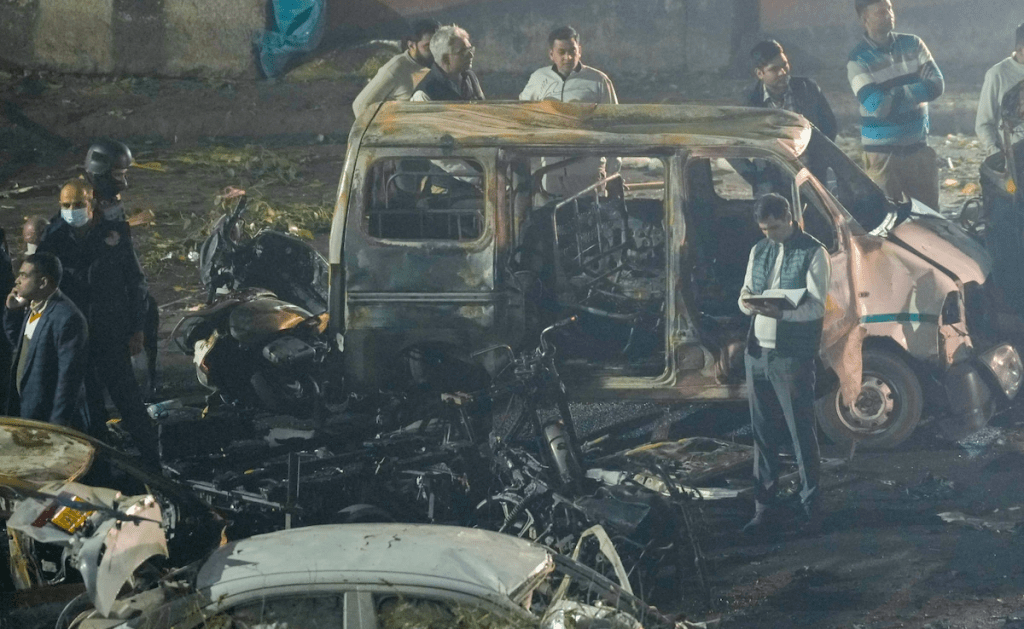
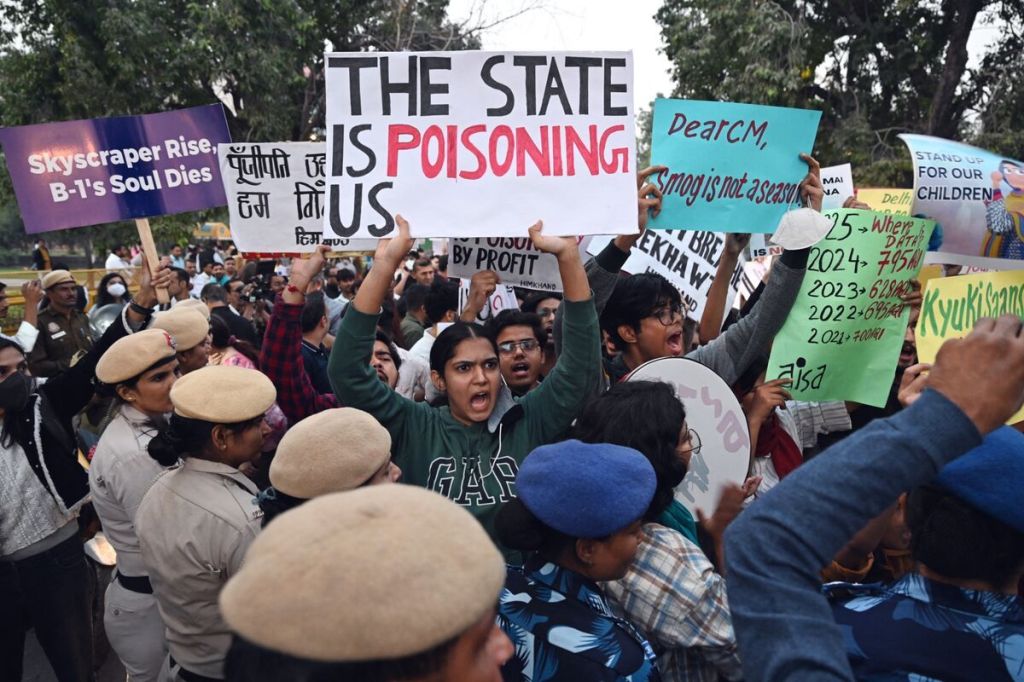
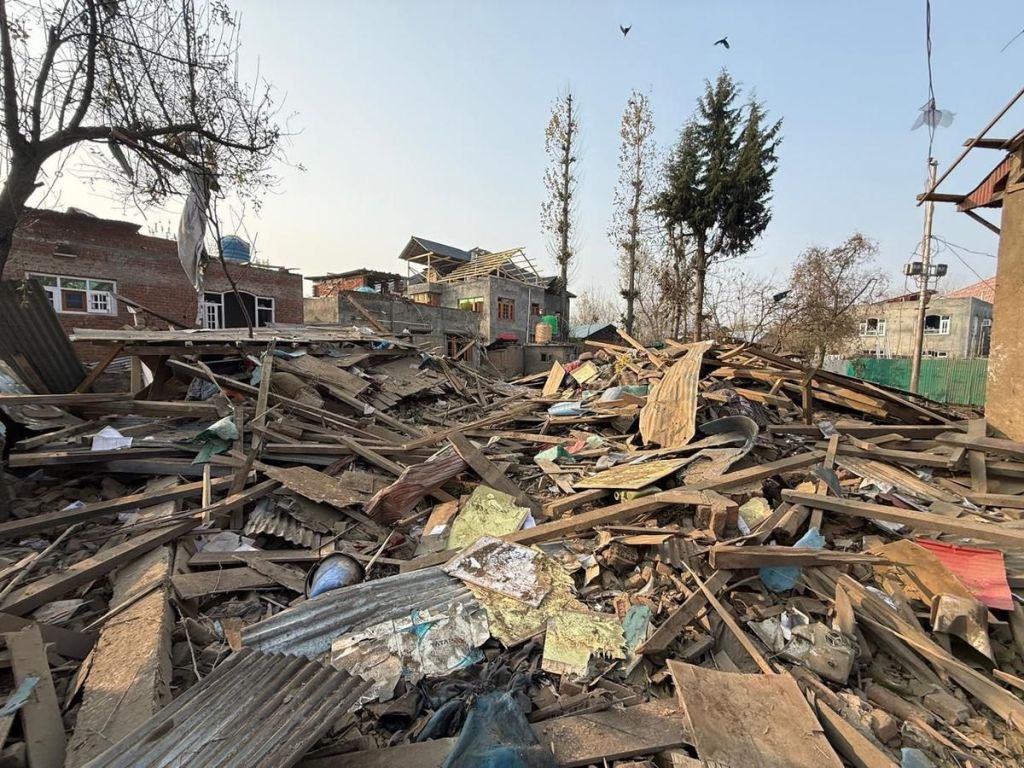
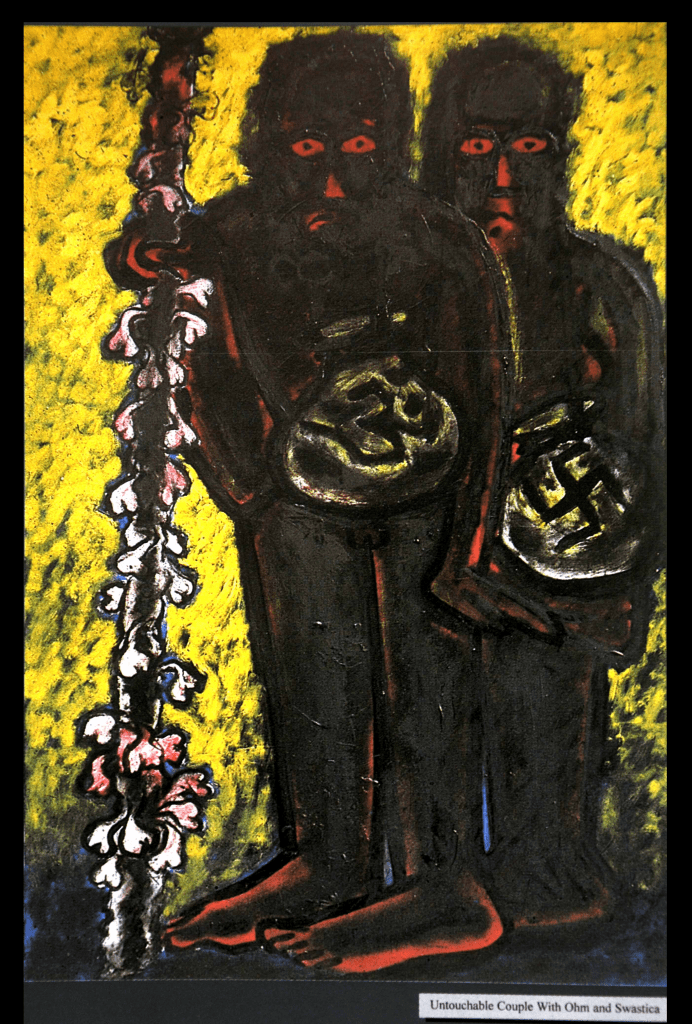
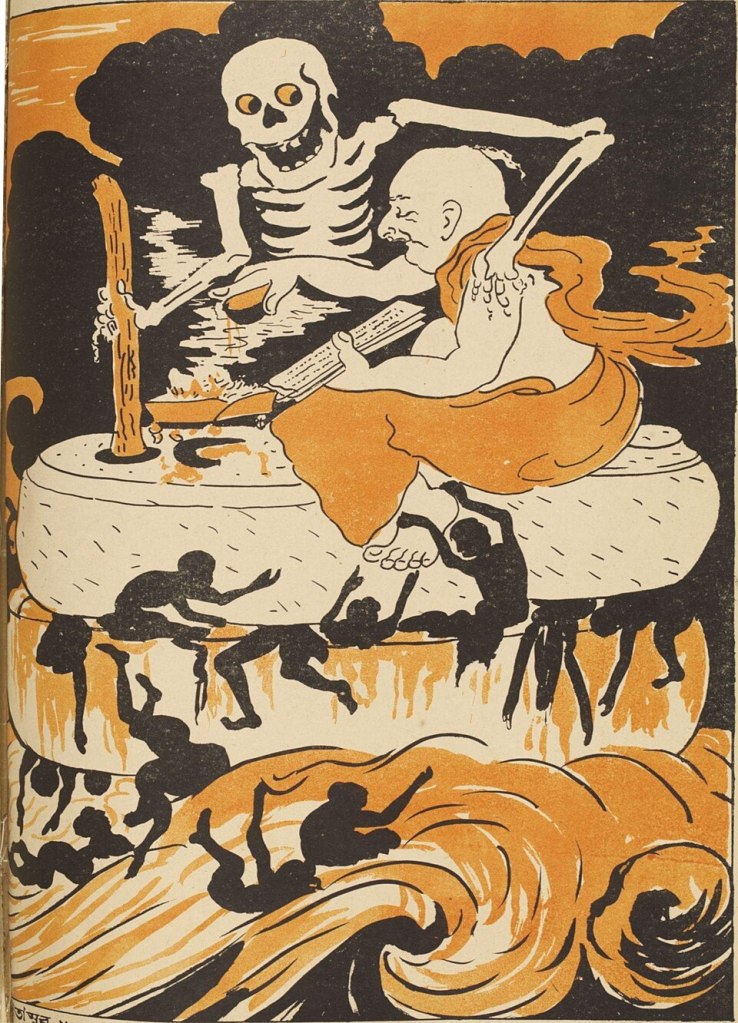
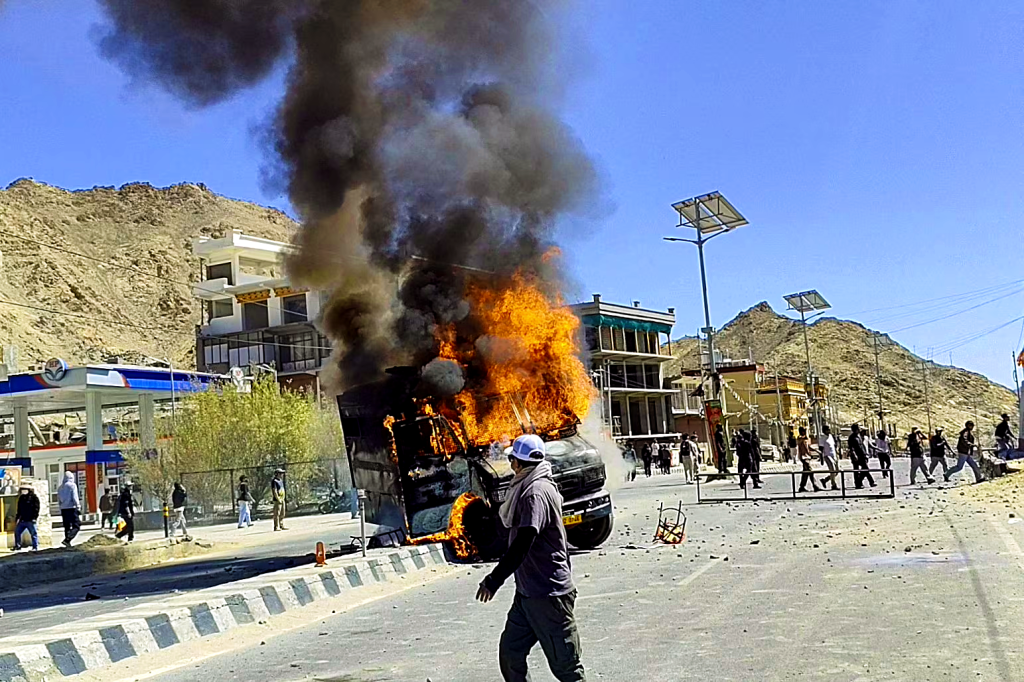
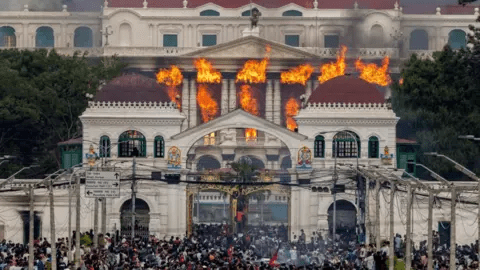
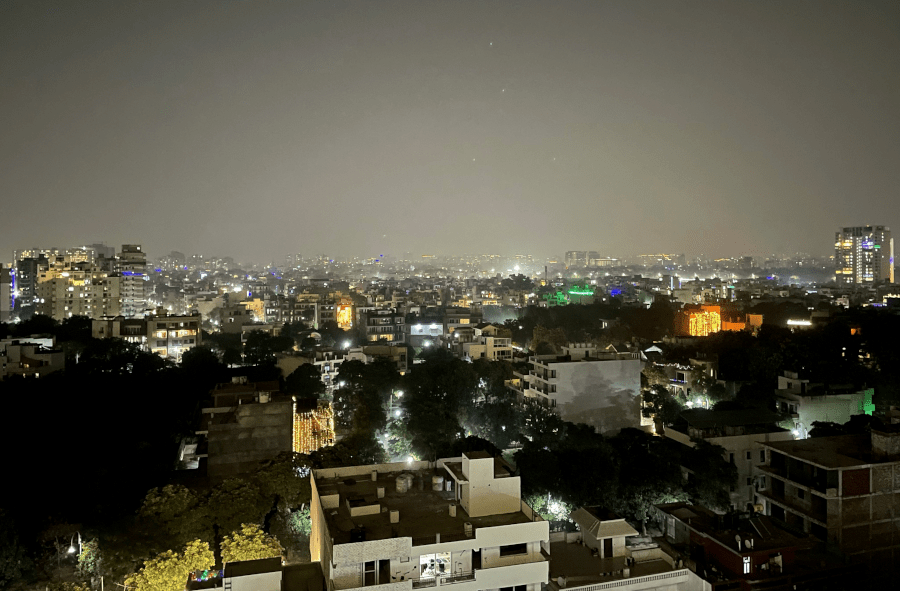
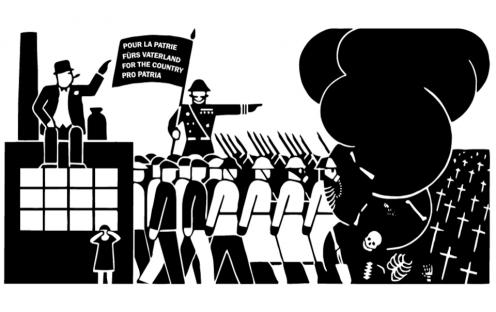
 No War But the Class War Initiative in South Asia